This article may contain affiliate links. I may earn a small commission at no extra cost to you. Learn More

Menu

Well water problems rarely stay politely in one lane. You might notice a sulfur smell in the shower, orange stains in the toilet bowl, or a cloudy look after heavy rain—and suddenly you’re questioning everything from your morning coffee to your laundry.
This best whole house water filter roundup helps you narrow down the best whole house water filter for well water choices for what you’re dealing with and how your home actually uses water. You’ll see how each pick approaches common well-water headaches, what ownership feels like day to day, and which style makes the most sense for your space and routine.
To build this well water filter comparison list, I compared the product details available for each system and focused on options that clearly match real well-water needs—like odor and staining control, whole-home coverage, and manageable maintenance—without turning your utility area into a science project.
If your well water brings the classic combo of staining and odor, this system stays tightly focused on those everyday frustrations. It’s rated to remove up to 7 PPM iron, up to 8 PPM hydrogen sulfide, and up to 1 PPM manganese, so you’re directly addressing the stuff that leaves orange marks, dark buildup, and that rotten-egg smell.
The way it treats water is straightforward: it uses an air pocket at the top of the tank to oxidize iron, sulfur, and manganese. That changes those contaminants into a form the media can trap, so you end up with water that behaves better at fixtures instead of leaving evidence behind.
The captured material gets flushed out during backwash, and the system refreshes the air pocket so it’s ready for the next run. You’re not manually rinsing media or babysitting a complicated routine—normal operation keeps the treatment cycle moving.
Sizing is designed around household demand, which matters when you’re running showers, laundry, and dishes close together. You get a 12 GPM option for 1–4 bathrooms and a 20 GPM option for 4+ bathrooms, so you keep a steady flow instead of feeling your water pressure drop when the house gets busy.
Control is built around a Bluetooth-enabled head, so you can adjust air draw, backwash cycles, and timing from your phone. You can check valve status, look at water usage history, and even trigger a backwash from a phone or tablet, which makes ownership feel a lot more manageable.
This system is designed to reduce wasted water by using smarter cycle control, and it comes with certified components, a lifetime warranty, and a 6-month money back guarantee. If stains and sulfur odor are the problems you want to stop thinking about, this is a clean, purpose-built route.
Pros:
Cons:
This is the “fix the smell and staining at the source” style of system, built around oxidation and capture rather than a general filter-first approach. If you’re comparing the best whole house well water filtration system finalists for odor and staining, this one leans hard into treatment you feel at the shower and see in the sink.
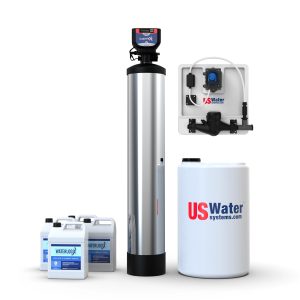
It injects hydrogen peroxide using continuous injection technology, so iron, manganese, and hydrogen sulfide get oxidized into material the system can trap. That means you’re not just masking issues—you’re changing what causes stains and that rotten-egg smell in the first place.
The stated removal range is set for tougher well-water scenarios: typical removal is listed up to 20 ppm iron, up to 30 ppm hydrogen sulfide, and up to 1 ppm manganese. It’s also designed to work effectively across a pH range of 6 to 9, which helps it stay functional across a broad range of well conditions.
You can choose the flow rate that fits your home: 10 GPM, 15 GPM, or 20 GPM. Those sizes map directly to bathroom count—10 GPM for 1–2 bathrooms, 15 GPM for 2–3.5 bathrooms, and 20 GPM for 4–6 bathrooms—so your treatment doesn’t become a bottleneck during normal peak use.
The hardware scales with those flow choices, with filter tank sizing that runs from 10" x 54" up to 13" x 54". It also includes a 15-gallon solution tank, so you’ve got dedicated space for the peroxide feed as part of the install footprint.
Day-to-day control leans modern: the valve connects via Bluetooth 5.0 and includes an internal meter that tracks gallons and flow rates. You can set the time of day, regeneration time, and backwash frequency, so the system works around your schedule instead of interrupting it.
Power needs stay light—this runs on 12-volt power with battery backup memory for outages, and the electricity use is stated as less than $2.00 per year. Backwashing generally runs about every two days, and in more extreme conditions it shifts to daily, so you keep the media bed cleaned out and ready to keep capturing oxidized material. The package includes a Stenner Precision Injection Panel, a 15-gallon peroxide tank, and 10 gallons of H2O2, with an optional 1 Micron Magna filter if you want extra fine sediment capture.
Pros:
Cons:
If your well is being treated with chlorine or chloramine, this is a strong “whole-home comfort” direction. For many homes, this style lands among the best whole house filter for well water front-runners when disinfectant taste or smell is the main reason you started shopping.
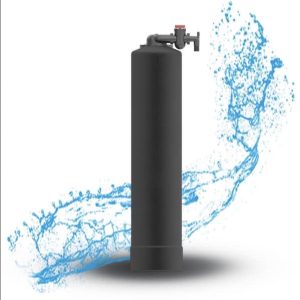
It uses advanced catalytic carbon media, so you’re addressing the chemical side of water that shows up as sharp taste, a strong hot-water smell, and that lingering “pool-like” feeling in the bathroom. [1] In daily use, that means showers feel more comfortable and drinking water tastes cleaner without changing how you use your home.
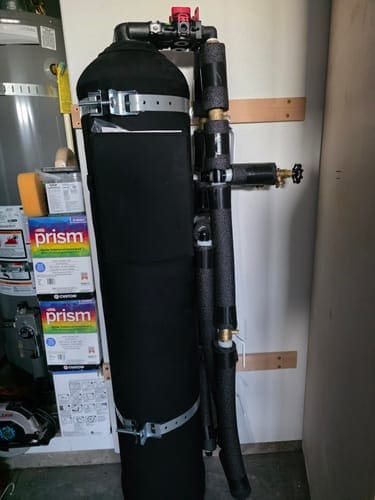
Catalytic carbon matters here because it’s built to handle chloramines more effectively than typical activated carbon. The practical payoff is consistency—you don’t have to “wait it out” or hope the smell fades after the water runs for a minute.
This system is positioned for removal of chlorine and chloramines and is also aimed at heavy metals, pesticides, herbicides, petroleum, and pharmaceutical by-products. The benefit is simple: you’re smoothing out chemical-related annoyances that show up across cooking, bathing, and everyday water use.
Longevity is a core part of the pitch. The media is tested to filter 600,000 to 1,000,000 gallons under typical situations, with a stated lifespan of up to 6 to 10 years. That pushes replacement anxiety to the background, so ownership feels less like a constant maintenance cycle.
The design uses an upflow (reverse flow) approach that increases contact between water and media, which supports effective treatment without requiring complex add-ons. It doesn’t need electricity and runs without wastewater, so it fits into a utility space without adding power needs or a drain requirement.
For fit, the system is offered in a 1.5 cubic foot size sized for 1 to 6 bathrooms. It includes a lifetime limited warranty and a 60-day money back guarantee, which keeps the decision feeling lower-pressure if your main goal is whole-house chemical cleanup.
Pros:
Cons:
This is a more modular “whole-home cleanup” option, especially if you want flexibility around capacity, construction style, and add-ons. If you’re narrowing down the best whole house water filtration system for well water lineup, it helps to have clearly defined capacity and flow ranges to plan around.
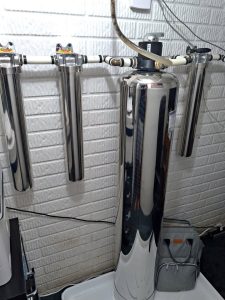
It’s offered in 1,000,000-gallon and 1,500,000-gallon capacities, so you can size your system around how long you want to run before thinking about major service. That translates to a calmer ownership rhythm, especially if you’d rather not revisit the decision anytime soon.
Flow support is clearly laid out. The 1,000,000-gallon setup lists service flow at 9–11 GPM, while the 1,500,000-gallon option lists 10–13 GPM, so you’re not guessing whether normal household use will feel constrained.
On the treatment side, it’s built to remove chlorine, chloramines, VOCs, THMs, pesticides, sulfur, hydrogen sulfide, heavy metals, and iron oxides. The practical payoff is water that feels more stable for everyday routines—cooking, showers, dishes—without the “something’s off” edge that makes you second-guess your water.
The filtration media blend is a major part of the system’s identity. It combines two coconut shell granular activated carbons (standard and catalytic), and it includes Eagle Redox Alloy media plus an anion exchange resin that targets heavy metals like lead and mercury. [2]
It’s also designed to reduce PFAS and PFOS, along with a range of by-products such as herbicides, pesticides, petroleum by-products, and pharmaceutical by-products, which helps broaden the treatment goal beyond a single issue.

The unit uses automatic backwash, which keeps the media refreshed so the system stays consistent without you doing a complicated manual routine. You can choose stainless steel or fiberglass construction, and the tank sizes are clearly defined: 10" x 54" for the 1,000,000-gallon unit and 12" x 52" for the 1,500,000-gallon unit, so you can plan the footprint before you commit.
Maintenance stays organized around specified cartridges: a 20" sediment cartridge and a 20" carbon block cartridge. If you want softening capability, there are 48,000 and 60,000 grain configurations with a brine tank listed at 18" x 33". There’s also a salt-free conditioner option designed to change how calcium behaves so it doesn’t form limescale the same way, which supports a cleaner-looking home over time.
Pros:
Cons:
If you want a long-life, low-fuss whole-home filtration approach, the Rhino is built for that “steady improvement everywhere” feel. If you’re trying to pick from the best whole house well water filter contenders, this is the type of system that aims for consistent everyday use rather than a complicated treatment routine.
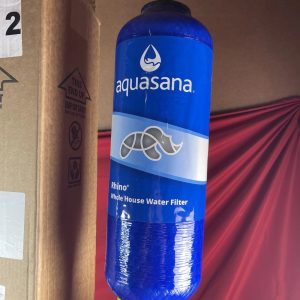
It reduces up to 97% chlorine and is built to reduce 78 contaminants, so day-to-day water tends to feel cleaner across drinking, cooking, and general household use. That means you notice fewer “off” moments at the kitchen sink, not just a small change in one bathroom.
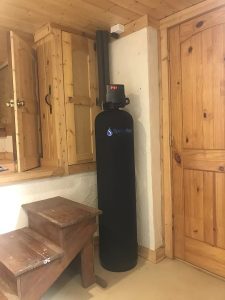
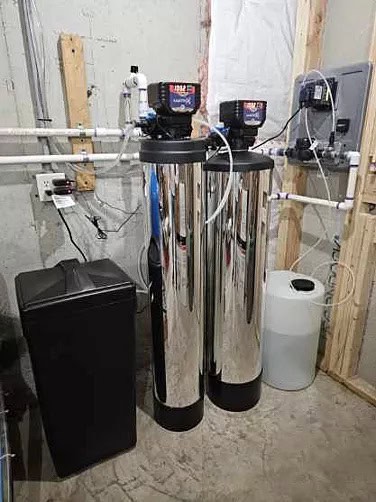
A big part of the experience comes down to its dual-tank, upflow design. Water moves upward through the media, which supports consistent contact and helps the system feel stable through normal use instead of fading quickly.
Inside, you’re working with activated carbon plus KDF media that resists microbial growth within the media bed. [3] That’s the kind of behind-the-scenes detail you appreciate later because it supports a cleaner, more reliable filtration environment.
Flow and capacity are clearly stated, which helps with planning. It’s rated at 7.0 gallons per minute, with a listed peak flow of 14.6 GPM, so you can match expectations to how your home runs water at busy times.
It’s also rated for 1,000,000 gallons or 10 years of capacity, which supports a long ownership horizon without constant major service. For many homeowners, that places it among the best whole house water filter system for well water go-to choices when “set it and live your life” is the goal.
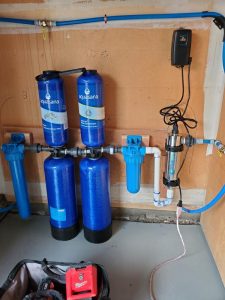
Installation and ownership stay simple because it doesn’t require electricity, a drain line, or backflushing. That keeps your utility setup cleaner and reduces the number of “extras” you need to accommodate.
Ongoing maintenance is mainly about filter swaps: the pre-filter is replaced about every 2 months in normal use, and the post-filter is replaced about every 6 months. The system is associated with NSF/ANSI 42 testing and tanks certified to NSF/ANSI 61 by the Water Quality Association, which supports confidence if you’re looking for a more established standards-based footing.
Pros:
Cons:
A good whole-house system doesn’t just “treat water.” It fits your home’s flow needs, matches the problems you actually notice, and stays manageable once it’s installed. This guide helps you sort those priorities quickly so you pick a setup that makes daily life easier.
Begin with the symptoms you actually live with. If your biggest complaint is orange staining, dark buildup, or a sulfur smell that hits when the hot water runs, you’ll get more satisfaction from a system that specifically targets iron, hydrogen sulfide, and manganese rather than a broad “general filtration” approach.
If your well is being disinfected and you’re reacting to a sharp taste or strong odor, a whole-house catalytic carbon route makes more sense. [4] That style focuses on reducing chlorine and chloramines so showers feel more comfortable and drinking water tastes cleaner without changing your routine around the house.

Flow rate matters because whole-house treatment sits in the path of everything—showers, laundry, dishes, and the kitchen sink all at once. When you’re comparing the best whole house well water filter system setups, look for sizing that matches bathroom count or clearly offers multiple flow choices.
Capacity matters for the long view. A higher rated gallon capacity supports a longer stretch of normal use before major service, which makes ownership feel calmer. If you prefer “set it up and forget it” energy, prioritize systems that make their capacity and service expectations clear.

Some systems focus on filtering out a broad mix of contaminants, while others focus on transforming specific problem compounds first so they’re easier to capture. Oxidation-based approaches are especially relevant when you’re fighting odor and staining, because turning those compounds into a removable form supports noticeable improvements at fixtures.
If you came into this search expecting the best whole house reverse osmosis system for well water paths to be the only serious answer, it helps to know there are whole-house oxidation setups that directly target the sources of smell and staining first.
Filtration-first approaches shine when you want whole-home cleanup for taste, smell, and general water quality—especially when disinfectants are part of your water story. The best match is the one that lines up with what you’re actually trying to stop noticing in your day.

Maintenance isn’t just “how often” but also “what kind.” Some setups revolve around periodic cartridge swaps with clear sizing, so you know exactly what you’ll be replacing. Others rely on backwashing routines that keep media refreshed, which changes what you need in your utility space and how the system behaves in the background.
Control style matters too. If you like being able to check status, tweak timing, or start a cycle without hovering over a control head, Bluetooth-enabled controls make ownership feel easier. If you prefer a simpler, less tech-driven experience, focus on systems that keep operation straightforward and don’t rely on app-style interaction for daily peace of mind.
Related Water Guide: Best reverse osmosis filter for well water
If your top priority is stopping iron stains and sulfur odor with a purpose-built well-water approach, the SpringWell Whole House Well Water Filter System stands out for its targeted ratings and phone-friendly control.
If you want a strong oxidation-and-capture route with selectable flow sizes and smart monitoring, the Matrixx InFusion system fits homes that want a more technical answer to serious odor and staining issues.
If disinfectant taste and smell are what pushed you to shop in the first place, the SoftPro Chlorine+ Carbon Whole House Water Filter is a clean match thanks to catalytic carbon and a low-complication install style.
If you prefer a flexible, modular system with multiple capacity choices and a multi-media approach, the Crystal Quest SMART option makes sense for households that want a broad treatment scope with organized maintenance.
And if you want long-life whole-home filtration with a straightforward ownership rhythm, the Aquasana Rhino offers a clearly defined capacity and a simple maintenance routine among the best whole house water filtration system for wells front-runners.
Now scroll back up to the product list and pick the system that matches your main water problem and your home’s demand. When you choose based on those two things, you end up with a setup that feels right every single day—not just on installation day.