This article may contain affiliate links. I may earn a small commission at no extra cost to you. Learn More

Menu

If your well water leaves a dusty film in a glass, clogs faucet screens, or turns toilet tanks into little sandboxes, the right sediment filtration changes how your whole home runs. You stop chasing random pressure drops. You spend less time cleaning gritty buildup. And you protect the plumbing and appliances that hate abrasive particles.
This best well water filter roundup helps you choose a whole-house sediment solution that matches what you’re seeing at the tap and what you want ownership to feel like—whether you prefer a simple cartridge swap, an automatic backwash system, or a setup that tackles sediment alongside iron and sulfur issues.
To find strong options for well-water sediment problems, I compared the product details carefully and focused on real-life outcomes: clearer water, steadier flow, simpler maintenance, and a setup that fits the way your home actually uses water.
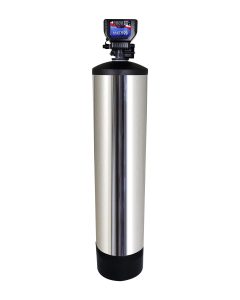
If your biggest frustration is fine silt that keeps slipping through and making water look hazy, this system leans hard into that problem. It uses granular filter media designed to capture sand, silt, and sediment down to below 5 microns, with a 5-micron nominal rating. That tighter capture is what makes the difference when the water doesn’t have big chunks—just a constant “dust” that shows up everywhere.
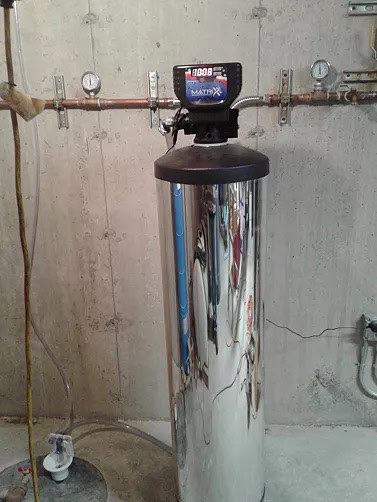
Because it backwashes automatically, it doesn’t rely on you swapping cartridges to stay effective. The system flushes out what it catches and refreshes the media, so you don’t live with the slow creep of reduced flow as the filter loads up. In normal use, that means the shower feels more consistent and your fixtures stay cleaner with less gritty buildup.
Sizing is built around matching your household demand. You choose from models rated at 8, 10, 15, or 20 GPM max flow, and each model has a specified backwash flow rate to clean itself properly. That choice matters because a filter that fits your demand feels invisible day to day—no “why is the water slower right now?” moments when multiple things run at once.
Control is designed to feel straightforward instead of technical. The system connects to the Legacy View App over Bluetooth, so you can set the time of day, schedule regeneration timing, and adjust backwash frequency without hovering over the equipment. You end up with a filter that behaves the way you want it to, on a schedule that fits your household.
It’s also built to stay practical when life happens. A 9-volt battery helps it return to service if power cuts out during regeneration, so you don’t waste water down the drain or get stuck mid-cycle. It monitors remaining battery life too, so you’re not surprised later.
Day-to-day ownership details round it out: there’s a built-in bypass valve so you can isolate the system when needed, and it runs on a 12-volt electrical system with operating cost stated as less than $2.00 per year. Add the lifetime tank warranty and the 10-year warranty on valve electronics, and the whole package is aimed at long-term, low-drama sediment control.
Pros:
Cons:

If your water problems go beyond sediment—think rust staining or that unmistakable sulfur “rotten egg” smell—this system takes a different approach. It’s an air-injection oxidizing setup built to treat iron, hydrogen sulfide, and manganese, with stated removal capacity up to 7 PPM iron, up to 8 PPM hydrogen sulfide, and up to 1 PPM manganese. That’s the kind of coverage that targets the issues that make water unpleasant to live with, not just inconvenient.
The way it tackles those contaminants is easy to understand in real life. Air injection creates an oxidizing step as water flows through, so those problem elements shift into forms that are easier to capture. Then a media bed listed as Greensand Fusion handles the filtration side, so what used to stain and smell gets trapped instead of traveling through your plumbing.
Because it backwashes to a drain, it’s designed to stay effective without you constantly opening housings or wrestling with frequent cartridge changes. [1] You can set backwash to run daily with the electronic control valve, which keeps the system refreshed in a predictable rhythm. The result is a “keeps itself moving” style of ownership that suits difficult well water.
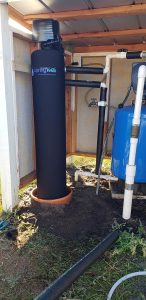
Control and tuning are a big part of the experience here. The Bluetooth head connects to an app, letting you adjust air draw and fine-tune backwash cycle timing. That’s helpful when your well water changes over seasons, or when you want to dial in performance after you see how the system behaves in your home.
Noise and disruption are addressed too. The system uses a slow-release compressed air step before backwash to avoid a loud, explosive blast when it cycles. In a home where the equipment sits near living space, that “less startling” routine makes the system feel more livable.
Sediment still matters here, and the system includes a spin-down sediment filter as part of the package. That spin-down uses a 90-micron reusable filter to grab larger sediment before it hits the main system, and it’s paired with 1-inch in/out connections and a stated max flow of 26.4 GPM. In practice, you rinse out the collected grit and keep your whole setup cleaner and smoother.
Pros:
Cons:
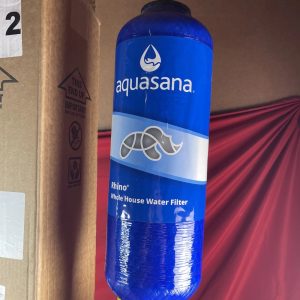
If you want a whole-house system that treats sediment as a front-end protection step, this one makes that structure clear. It’s a dual-tank setup paired with a dedicated 20-inch pre-filter. That pre-filter’s job is simple: catch dirt and sediment before it can clog the main filtration unit, so the whole system stays steadier and less finicky.
That pre-filter focus shows up in daily life. When sediment spikes—after heavy rain or seasonal shifts—you’re less likely to find grit in faucet aerators or cloudy water swirling in a glass. The practical win is fewer nuisance clogs and less abrasive junk traveling through fixtures.
Capacity and longevity are part of the appeal here. The system lists a 1,000,000-gallon capacity and up to 10 years, which is the kind of timeframe that makes whole-house filtration feel less like a hobby and more like infrastructure. It’s the difference between “I’m constantly managing this” and “this just lives here and does its job.”
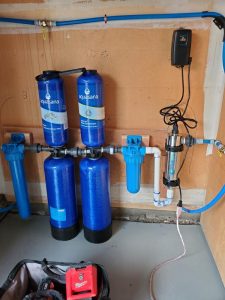
Flow is framed in two ways: a 7.0 GPM rated flow rate and a 14.6 GPM peak flow rate. That combination supports normal household use while giving you breathing room when demand spikes. In real terms, it’s built to keep water moving during the routines that stack up in a busy home.
Maintenance stays defined and predictable because the pre-filter has clear replacement timing. The standard pre-filter changes every 2 months, which suits heavier sediment situations where you want consistent capture. If you’d rather stretch that routine, there’s an optional low-maintenance pre-filter that lasts three times longer and gets replaced every 6 months, which makes upkeep feel more like a “couple times a year” habit.
This system also prioritizes low-complexity operation for the main unit. It runs without electricity, drain lines, or backflushing for the primary filtration, so you don’t plan installation around power or a drain. Add the material and certification details—food-grade high-density polyethylene tanks and WQA certification to NSF/ANSI/CAN 61—and you get a setup that emphasizes confidence in what touches your water. It’s also independently tested to NSF/ANSI Standard 42 to remove up to 97% chlorine for 1,000,000 gallons, and the media includes copper-zinc KDF used to inhibit bacteria and algae growth and extend filter life, which supports a more stable long-term ownership experience.
Pros:
Cons: