This article may contain affiliate links. I may earn a small commission at no extra cost to you. Learn More

Menu

If you’ve ever poured a glass from the tap and still felt unsure, you’re not alone. Sometimes it’s a lingering smell, sometimes it’s the way water behaves in your kettle or shower, and sometimes it’s just the nagging feeling that you’re guessing instead of knowing—exactly why so many people start a Crystal Quest water filter review journey in the first place.
This roundup walks you through ten different ways to treat your water—whole-house filtration, countertop purification, faucet-mounted convenience, shower filtration, softening, and more—so you can match the right system to how you actually live. You’ll get clear, practical guidance on what each setup is built to do, what it feels like day to day, and what the routine looks like once it’s installed.
To build this list, I compared the product details carefully to make a clear Crystal Quest water filter comparison across different setups—whole-house systems for everyday water throughout your home, point-of-use picks for drinking and cooking, and specialty systems for showering, softening, or targeted needs.
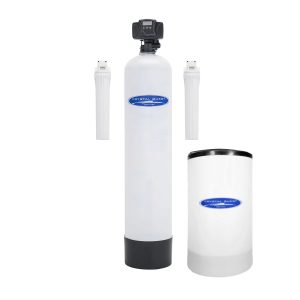
If you want a single whole-house system that treats water across the board, this setup is designed to feel like a quiet upgrade at every faucet, and it fits naturally on the best Crystal Quest water filter shortlist for whole-home coverage. It follows a four-step treatment path that starts with a 20-inch sediment cartridge and moves into a 20-inch solid carbon cartridge, so you stop pushing larger particles and common taste-and-odor issues deeper into your plumbing.
After those first steps, the system adds a 0.2-micron ultrafiltration membrane. That tight barrier works like a fine screen in the middle of the process, which helps your water feel more consistent when you fill a glass, rinse produce, or run a bath.
The final stage is the SMART mineral tank, built with a blend that includes coconut-shell activated carbon (including catalytic carbon), Eagle Redox Alloys (9500 and 6500), and an anion exchange resin. The practical upside is a whole-home approach that aims for broad treatment without turning daily use into a constant project.
Sizing is straightforward: you choose either 1.5 or 2.0 cubic feet of media, with stated capacities of 1,000,000 or 1,500,000 gallons. That long runway means the system is positioned for extended service rather than frequent media swaps.

Flow support is also spelled out clearly. Service flow is 9–11 GPM for the smaller size and 10–13 GPM for the larger size, so you’re selecting based on how busy your home gets during peak times.
Maintenance stays hands-off thanks to automatic backwashing. And if added protection matters to you, there are options like a 12 GPM UV sterilizer and a leak detector valve that shuts off water to help prevent flooding, which supports a more “set it and forget it” ownership vibe.
Pros:
Cons:
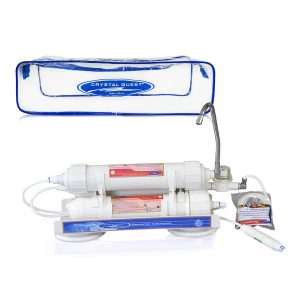
For anyone browsing Crystal Quest water filter reviews and leaning toward a countertop solution, this RO setup is a practical fit when you want purified water for drinking and cooking without committing to an under-sink install. It connects to your faucet and runs through 10 stages, starting with one-micron filter pads and granulated activated carbon, which helps your water feel cleaner early in the process.
A key part of the design is the RO membrane, which filters particles down to 1/10,000 of a micron. In everyday terms, you’re working with a deep filtration step that’s especially noticeable when you make coffee or tea, fill ice trays, or keep a bottle ready in the fridge. [1]
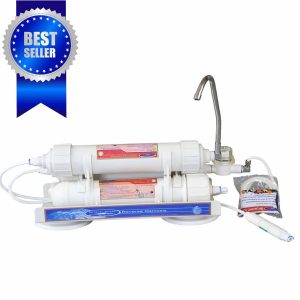
The system keeps layering treatment after the membrane. It includes two beds of Eagle Redox Alloy media made from copper and zinc, then ion exchange resin, followed by a final carbon step and a one-micron polishing filter. The upshot is water that’s repeatedly refined before you drink it.
Size is another reason this works well in small spaces. The footprint is listed at 16 inches by 7 inches by 7 inches, which makes it easier to live with on a countertop in an apartment-style kitchen, office setup, or compact home routine.
Production is where you think in “fill and store” terms. It’s rated up to 50 gallons per day—about 2 gallons per hour—when conditions support it, and it highlights that incoming water pressure affects output, with around 60 psi supporting that 50 GPD rating.
It also notes a much slower on-demand flow rate—about 25 gallons per day at standard residential faucet pressure—so you’ll typically fill a container or pitcher and keep it ready rather than expecting an instant fast pour.
Pros:
Cons:
This whole-house system is built for water problems you notice fast—especially the kinds of issues that show up as staining, discoloration, and strong odor. It targets iron, manganese, and hydrogen sulfide, which are common culprits behind those everyday headaches.
The treatment path starts with a 20-inch sediment cartridge. That first stage helps keep silt, sand, and dirt from overloading the main media, which supports steadier performance and fewer headaches over time.
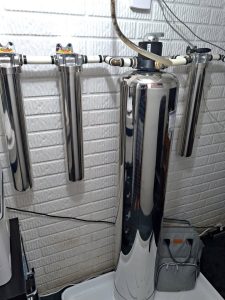
At the core is a mineral tank focused on reducing iron, manganese, and hydrogen sulfide. It also uses Eagle Redox Alloy media (6500 and 9500) and is built to inhibit bacteria growth throughout the unit, supporting a cleaner, more stable whole-house setup.
After the main tank, the system finishes with a 20-inch solid carbon cartridge. That final step is aimed at VOCs and leftover pesticides, insecticides, and industrial solvents, so the water you use for dishes, cooking, and daily drinking feels more refined.
Sizing follows a familiar pattern: 1.5 cubic feet of media is paired with a stated 1,000,000-gallon capacity, while 2.0 cubic feet aligns with 1,500,000 gallons. That scale supports a true whole-house approach rather than a short-cycle filter change routine.
To keep the media working effectively, backwash runs automatically. And if your water needs go beyond metals, the system can be configured with extras like a SMART filter and/or a softener, which helps you build around your specific situation.
Pros:
Cons:
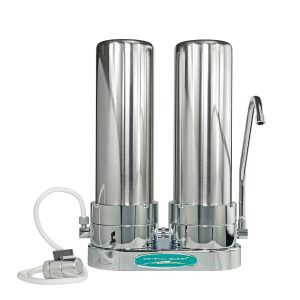
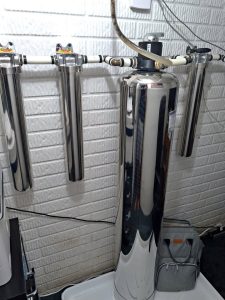
If you want targeted treatment without changing your plumbing, this countertop setup keeps things simple. It sits on your counter, connects to a kitchen faucet, and uses a diverter valve so you can switch between filtered and unfiltered water depending on what you’re doing.
Housing choices help you match it to your space and preferences. You can go with BPA-free white polypropylene or stainless steel, and you can choose a single, double, or triple configuration, depending on how much media you want working for you.
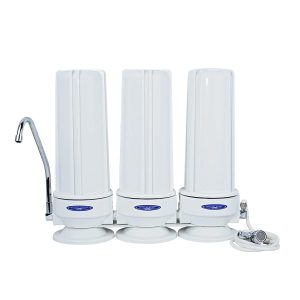
A big day-to-day advantage is the long stated output: 10,000 gallons, with an estimated 1–3 years of use in normal conditions. That turns the routine into occasional maintenance rather than constant replacement planning.
Inside, the system combines a fluoride removal cartridge, a SMART cartridge, and a carbon block filter. The layout is designed so fluoride treatment happens alongside broader polishing, which matters most when you’re filling a glass or cooking.
For the fluoride stage, the cartridge uses fluoride charcoal granulated activated carbon unless aluminum oxide is requested. That choice gives you a clear way to align the fluoride media with what you prefer. [2]
Flow behavior also helps you know when it’s time to change filters. The system is rated for a maximum flow of 0.5 GPM, and when the cartridge is spent, flow is designed to stop or slow down significantly, which acts like a practical “it’s time” signal.
Pros:
Cons:
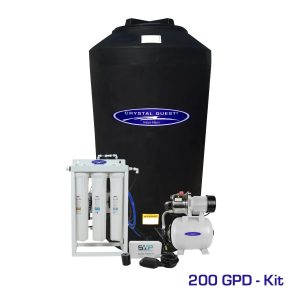
This is the “purified water throughout the home” approach, built for people who want a deep treatment method applied at full-house scale. The system offers a wide range of sizes, from 200 up to 7,000 GPD, with multiple flow-rate options so you can select a build that matches how your home uses water.
The design is modular and arrives operational with minimal plumbing. That setup detail matters because it shifts the experience away from assembling a complicated kit and toward connecting a complete system in a more straightforward way.
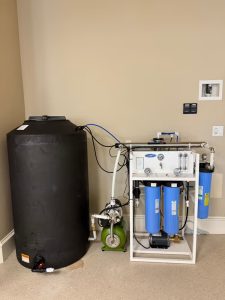
Each system includes prefiltration intended to extend membrane life. That supports more stable long-term performance, so you’re not burning through the most important parts faster than necessary.
Storage is handled through an optional kit that uses an atmospheric tank sized at 165, 220, or 500 gallons. A pump then supplies the home as needed, which helps the system feel more like normal tap water in daily use instead of a “wait and refill” routine.
Operating requirements are clearly defined. Minimum feed pressure is 45 psi, with operating pressure listed at 50–150 psi, so you can quickly gauge fit with your home’s water conditions.
It’s also built to handle up to 15 grains per gallon of hardness. That matters because it sets a practical boundary for where the system works best without overextending the design.
Power support is part of the picture too: it runs on standard 110V by default, with 220V and either 50 or 60 hertz supported depending on what you need. And with regular prefilter and membrane changes, expected lifespan is listed around 15–20 years, which frames it as a long-term home upgrade.
Pros:
Cons:
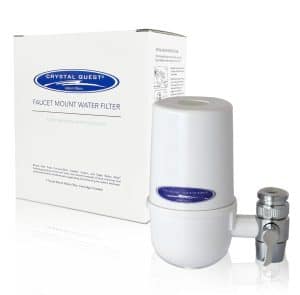
If you want better water at one faucet without giving up counter space, this mount-style system is built for everyday convenience, and it’s an easy add-on in a Crystal Quest water filter review style roundup. It attaches right at the sink, making it especially useful for drinking, cooking, and quick bottle refills.
The filtration setup runs through six stages and is rated up to 2,000 gallons, with an estimated 6–12 months of use in normal conditions. That gives you a clear maintenance window that’s measured in months, not weeks.
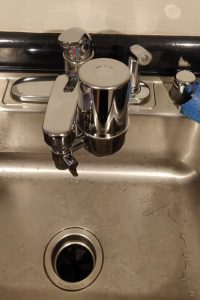
Flow is intentionally on the slower side, with a suggested rate of 0.30 gallons per minute or less. In real life, that encourages a steady fill rhythm—think filling a jug for the fridge rather than trying to blast out a big pot in seconds.
The housing is BPA-free, and the system is ISO-certified. Those trust markers matter most because this unit sits right where you fill water you’ll drink and cook with day after day.
You can choose a chrome or white finish, which helps it blend into common kitchen setups. That small detail makes ownership feel cleaner, especially when the filter stays on the faucet long-term.
Overall, this system fits people who want a simple, minimal-install option that improves daily drinking and cooking water without touching the plumbing under the sink.
Pros:
Cons: