This article may contain affiliate links. I may earn a small commission at no extra cost to you. Learn More

Menu

Hard well water has a way of showing up everywhere. You see it as cloudy spots on glasses, you feel it in stiff laundry, and you clean it off your faucets again and again. If your kettle keeps crusting over and soap never seems to rinse the way you expect, it’s usually time to stop fighting the symptoms and put a whole-home softener in place.
This roundup walks you through five strong options, explained in plain language, so you can choose the best water softener for well water setup for your home. You’ll see what each system is built to handle, how the day-to-day routine feels, and which one matches your home’s water use without making maintenance a constant chore.
To build this most recommended water softener list, I compared key product details that matter for well water homes—like flow support, regeneration style, salt and water efficiency, monitoring, and the overall ownership routine. The goal is simple: help you pick a softener that fits your household’s demand and the kind of maintenance you’re willing to live with long term.
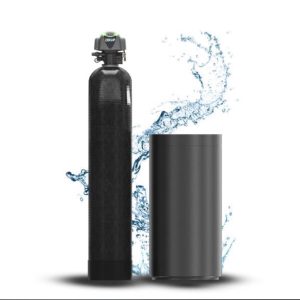
If you’re trying to narrow down the best well water softener contenders, this system leans hard into smart monitoring. You manage and monitor the setup through a smartphone app, so you’re not guessing about what’s going on behind the scenes. That changes the ownership feel immediately, because you stay informed without needing to hover over the equipment.
The other headline is leak protection built into the setup. You get a network hub that connects your smart water devices, along with a remote hub extender that gives you a one-touch on/off control button. Two remote leak detectors let you cover common trouble spots like under sinks, so you notice issues earlier. The system supports automatic leak detection and shut-off, which means it responds quickly when you’re busy or away.
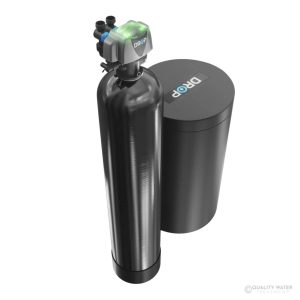
On the softening side, you choose a grain capacity—32,000, 48,000, or up to 64,000 grains—so you can match the build to your household’s demand. It uses a high-efficiency approach with an advanced programmable control valve, so you get a system that’s built to run intelligently instead of wasting salt by default. In normal use, regeneration averages about twice a month, or around every 14 days depending on your water quality and household use, so the routine typically feels predictable.
Salt efficiency is another strong theme here. It pre-makes only 70% of the brine right before regeneration, then calculates the top-up needed based on what the resin actually used, saving up to 30% more salt. That translates to fewer salt bag runs and less “did I just burn through a bunch of salt for no reason?” frustration. [1]
This model also supports a remote low-salt sensor that notifies you before you run out, so you avoid the surprise shift back to hard water. And if your home sits idle for a while, an automatic refresh kicks in if no water is used for seven days, which helps keep the system healthier during downtime. If you want soft water plus a modern, watchful ownership experience—especially with leak detection baked in—this one fits that goal cleanly.
Pros:
Cons:
If you’re comparing the best water softener system for well water picks, SpringWell makes the sizing straightforward. You pick a build based on bathroom count—1–3, 4–6, or 7+—so you’re choosing around real household demand instead of guessing. That matters on well water because the “everyone showering, laundry running” moments are where undersized systems feel frustrating.
Flow support is clearly laid out. Depending on the size you choose, service flow is 11, 13, or 20 GPM, so your fixtures stay usable when multiple taps run at once. Everything is built around a 1” connection size, which keeps the system aligned with typical whole-home plumbing.
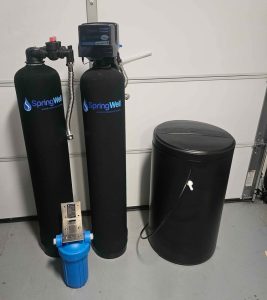
Capacity scales with those sizes as well, at 32K grains, 48K grains, or 80K grains. That translates to more breathing room between regenerations as you move up in size, which most households notice as more consistent soft water through the week. You also get predictable planning around equipment footprint: the brine tank stays consistent at 18” wide by 33” tall, while the resin tank width varies by model.
The routine is easy to picture. Regeneration runs as needed and averages around every 14 days depending on water use, so it typically settles into a normal household rhythm. SpringWell also gives a practical salt expectation—on average, a 40-pound bag every 1–2 months depending on use—so you can estimate your refill routine without overthinking it.
Installation details help smooth out setup. The system includes an electronic head, a brine tank, and a 50-foot drain line with a hose clamp, so you’re not scrambling for basics midway through the install. It operates within 25–80 PSI and 36–120°F, which fits typical indoor install conditions. If you want a classic salt softener with strong flow options and clear sizing by home layout, this is a comfortable choice.
Pros:
Cons:
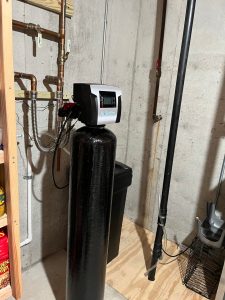
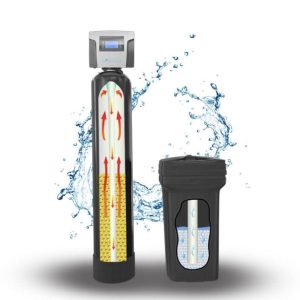
If you’re trying to pick from the best well water softener system finalists, this one fits the “efficient but not fussy” lane. You choose from 32,000, 40,000, 48,000, or up to 64,000 grains, so you can size it to your home rather than overspending on capacity you won’t use. That’s especially helpful when your water use shifts throughout the year and you don’t want a one-size-fits-all tank.
Flow support is a big part of the experience here. The system uses large 1” and larger internal plumbing, designed for high-flow performance. In practice, that means you’re less likely to feel that “soft water equals weak showers” tradeoff that some homeowners worry about.
The efficiency story focuses on how it manages brine. It pre-makes only 70% of the brine right before regeneration, then calculates what’s needed to recharge the resin based on actual depletion, saving up to 30% more salt. The payoff is straightforward: you use less salt over time while still keeping the system doing its job.
It also refills the brine tank using treated soft water, which helps keep the brine tank cleaner and conserves usable capacity. Over weeks and months, that translates to a more stable routine and less hassle around the brine side of ownership.
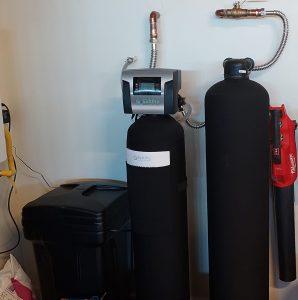
Regeneration timing stays tied to real use. In normal use, it regenerates as needed and averages about 4 to 7 times per month depending on household demand. If capacity drops below 3%, a short 15-minute recharge restores extra capacity so the system keeps softening until the regular 2:00 a.m. regeneration time. That matters because it helps you avoid running out of soft water during the day.
If the house sits idle, an automatic refresh triggers if no water is used for seven days, which helps prevent bacteria growth inside the system during inactivity. And for long-term confidence, it comes with a lifetime limited warranty. If you want a high-efficiency well-water softener that stays consistent without needing you to babysit it, this one fits that lane.
Check out my full SoftPro water softener review to learn even more about this great water softening system.
Pros:
Cons:
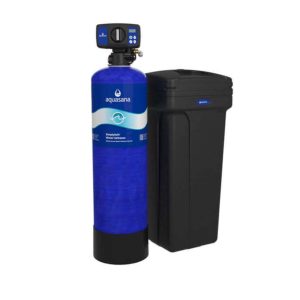
If you’re weighing the best water softener systems for well water front-runners and you want a clear certification signal, SimplySoft aims squarely at that. It’s a 60,000-grain system designed to deliver consistent soft water for bigger household demand, so you notice fewer hard-water surprises during the week.

Flow is rated at 11.1 GPM, with a 16.6 GPM peak. That translates to a home that keeps moving when multiple fixtures run—showers stay comfortable, and everyday tasks don’t feel bottlenecked. The softening method uses ion exchange, which swaps out hardness minerals so you stop dealing with scale buildup as aggressively. [3]
Certification is a key buying signal here. It’s certified to NSF/ANSI Standard 44 for hardness reduction and to CSA B483.1, which gives you a clearer benchmark for performance. For many homeowners, that reduces uncertainty, because you’re choosing something with an established standard behind it.
Efficiency is another practical theme. In metered operation, it uses 50% less salt and 28% less water than conventional softeners. That means a simpler routine with fewer salt-hauling moments and less wasted water during regeneration.
Usability is designed to stay clear. The fully customizable control panel includes an LCD that shows time, regeneration modes, and gallons remaining. In day-to-day use, that makes planning easier because you can glance at the display instead of guessing when regeneration will happen.
A built-in pre-filter targets rust, sediment, and silt, which matters for well water homes that deal with particulates. There’s also an upgrade option for a longer-lasting pre-filter, and replacement timing is provided for both versions, so you can keep maintenance predictable. It operates across 40–100°F and handles up to 125 PSI, which keeps placement flexible in typical indoor installs.
Pros:
Cons:
If you’ve been stuck on the question what is the best water softener for well water, Matrixx is the practical, numbers-forward route for sizing around flow and keeping regeneration tied to real use. The Matrixx line offers three builds that deliver 10, 15, or 20 gallons per minute of service flow, with peak flow rising to 12, 17, or 22 GPM depending on the model. That gives you a cleaner way to match the system to your home’s busiest water moments.
Connection sizing stays familiar. It connects with 1” or 3/4” NPT plumbing, which helps it fit common whole-home setups without unusual adapters or oddball fittings. When installation feels straightforward from the start, you’re far more likely to end up with a clean, confident setup.

The biggest daily advantage is the metered design. It tracks your water use and times regeneration around what your household actually does, so you’re not regenerating on a fixed schedule that ignores real demand. That translates to a routine that stays calmer through busy weeks and quiet weeks alike.
Efficiency settings are spelled out in a way that supports different priorities. High-efficiency settings use as little as 3, 4.5, or 6 pounds of salt per regeneration depending on the model, so you conserve salt without needing to micromanage the system. You also get room to choose operating settings with different grain capacities, which helps you dial in the balance between salt use and time between regenerations.
Operating ranges help you confirm compatibility with typical home conditions. In normal use, it runs within 20 to 100 PSI and a 39 to 100°F water temperature window. It uses a low-voltage power setup, which keeps the valve and control side running without anything complicated.
Maintenance planning is easier because the brine tank holds up to 220 pounds of salt, so you refill less often. The brine tank size is 15” x 17” x 36”, which helps you plan space before install day. And it comes with an installation manual in the box, which helps keep setup from dragging on. If you want a straightforward metered softener lineup with clear flow sizing and an easy-to-predict routine, Matrixx fits that profile.
Pros:
Cons:
A well-water softener decision gets easier when you focus on three things: how much water your home uses at once, how you want regeneration to behave, and what kind of maintenance routine you’ll actually keep up with. The goal isn’t to chase the biggest system—it’s to pick one that matches your household and keeps soft water consistent without becoming another job.

Start with how your home uses water during the busiest hour, not the calmest day. If your showers overlap with laundry and dishwashing, prioritize a system that clearly supports higher service flow. When a softener keeps up with peak demand, you notice it in stable shower pressure and fewer “why did the water suddenly feel different?” moments.
If you’re choosing between models with different flow and peak flow support, treat those numbers as a comfort signal. Higher flow support typically means your household routine feels smoother when several fixtures run at once. That’s especially useful in larger homes or in homes where mornings and evenings get busy fast.
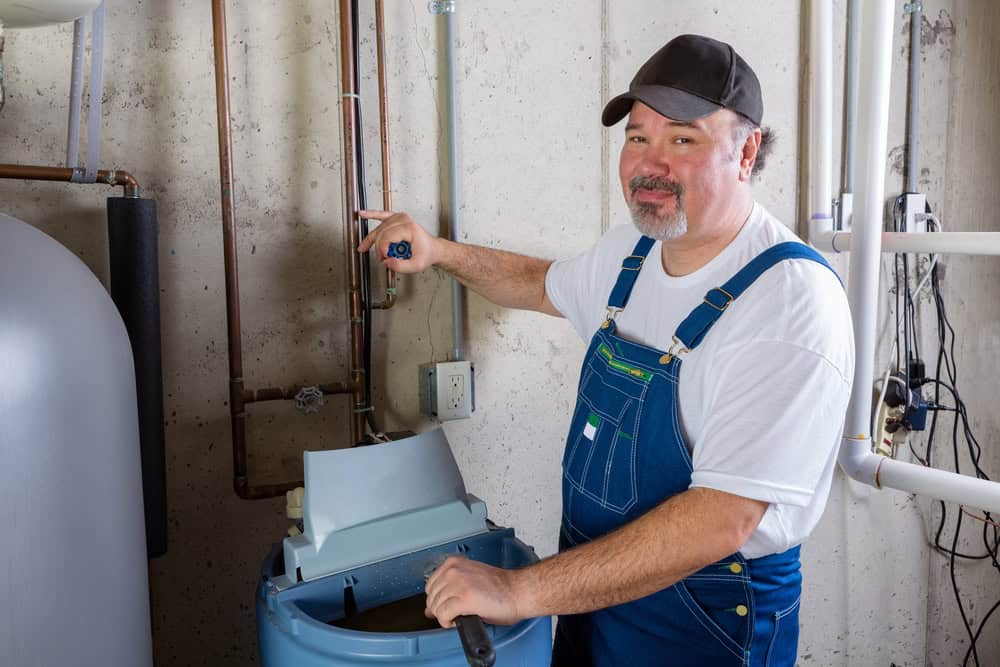
If you’re narrowing down the best water softener for well water shortlist, pay attention to whether the system regenerates on a calendar or based on actual water use. A metered softener tracks usage and regenerates based on what you really use, which keeps the routine aligned with your household patterns. In normal use, that means fewer unnecessary regenerations and a steadier efficiency rhythm over time.
Some systems add a buffer for extra consistency, like a short recharge when capacity drops very low before the normal overnight regeneration cycle. That kind of behavior matters because it helps you avoid running out of soft water during the day. If you’ve ever noticed water feeling hard at the worst possible time, this is the kind of detail that improves the day-to-day experience.
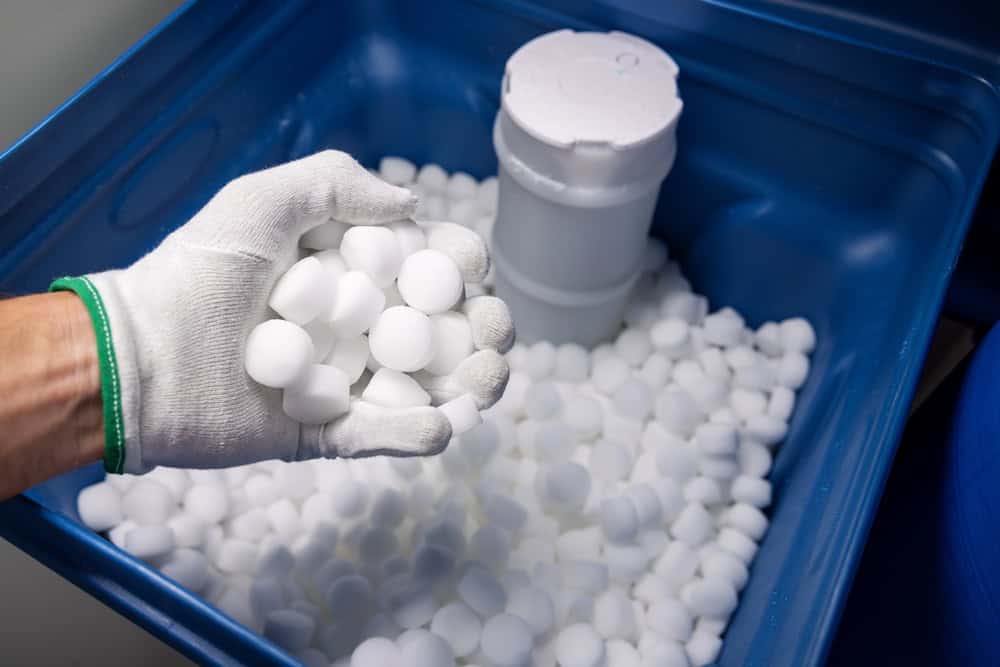
These well water softener reviews make one thing clear: salt efficiency isn’t just a number, it’s how often you’re hauling bags and how predictable your refill routine feels. Systems that manage brine more precisely reduce salt use while still keeping the resin recharged, so your routine stays lighter. When the softener uses less salt in normal use, you refill less often and you keep operating costs more predictable.
Water efficiency matters too, especially if you care about how much water regeneration uses. Some systems highlight reduced water use in metered operation compared with conventional softeners, which typically means less waste during regeneration. Over time, that’s a practical win you feel through a steadier ownership routine.

If you’re building the best well water softener and filtration system path for your home, monitoring and protection features often end up being the difference between “it works” and “it feels stress-free.” Some homeowners want a simple control panel they can glance at, while others want app-based monitoring and alerts. An LCD that shows gallons remaining and regeneration modes makes it easier to plan your week, because you can see what’s happening without guessing.
If leak detection and automatic shut-off are priorities, look for systems that integrate those features into the setup, including remote leak sensors for common risk areas. That translates to less worry about unseen leaks, especially when you’re away from home. For many well-water households, that peace of mind is just as valuable as the soft water itself.
If you want the most modern ownership experience, SoftPro Smart Home+ stands out for app monitoring and built-in leak detection and shut-off support, with capacity choices up to 64,000 grains. If your top priority is clear sizing for busy households, SpringWell makes it easy to choose based on bathrooms and supports service flow up to 20 GPM with capacity up to 80K grains. If you want high-efficiency softening that stays consistent in normal use, SoftPro Elite HE brings multiple capacity choices, an as-needed regeneration pattern, and a brine approach designed to save up to 30% more salt.
If certification and a clear, efficient routine matter most, Aquasana SimplySoft gives you a certified 60,000-grain system with a display that shows gallons remaining and a built-in pre-filter for rust, sediment, and silt. And if you want a metered lineup that’s straightforward to size around flow and peak flow, Matrixx offers multiple service-flow builds and high-efficiency settings that use as little as 3, 4.5, or 6 pounds of salt per regeneration depending on model.
The best move now is to choose the best well water softener pick based on your home’s busiest water moments and the maintenance routine you’ll actually keep. Scroll back up to the product list, narrow it to the two or three that fit your household’s demand, and choose the one that feels easiest to live with week after week.