This article may contain affiliate links. I may earn a small commission at no extra cost to you. Learn More

Menu

You don’t start shopping for water treatment because it’s fun. If you landed here for a US Water Systems review, you probably started because something feels off—spots that won’t wipe away, a sulfur smell that turns your stomach, tap water that ruins your coffee, or a whole-house “something” that makes you second-guess every shower and every glass.
This roundup helps you match the right type of system to the problem you actually have. Some options focus on drinking and cooking water at one dedicated faucet. Others treat water at the point it enters your home, so every tap feels different. Below, you’ll find clear, practical reviews plus a simple guide to choosing what fits your setup.
To build this list of US Water Systems reviews, I compared the product details carefully and focused on options that make sense in real homes—systems that address common water frustrations and feel manageable to own. You’ll see what each setup does, how it fits into daily routines, and what the maintenance looks like over time.
If you’re working through a US Water Systems comparison for better drinking and cooking water, this under-sink reverse osmosis setup keeps the improvement focused where you use it most. You get a dedicated drinking faucet, so filling a glass, topping off a bottle, or making tea becomes a quick “turn the handle and go” habit.
The filtration runs in clear stages, and each one has a job you’ll notice. A sediment filter handles dirt and rust first, so the rest of the system stays protected. Then you move through a carbon block that reduces chlorine and other chemicals, which is the kind of change you feel immediately when you brew coffee or drink plain water.
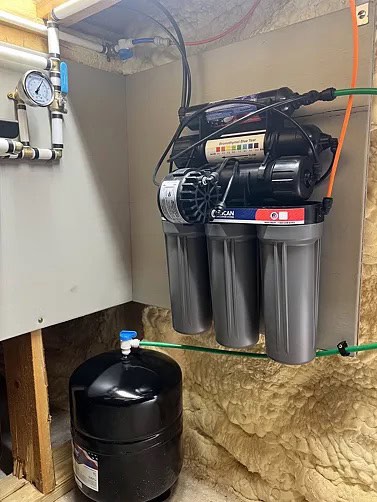
After that, a sub-micron carbon block targets chloramine and PFAS while supporting the RO membrane’s performance. In everyday terms, you get a cleaner baseline going into the membrane, so the system stays on track for the type of deep purification you’re buying it for.
The membrane itself is a 100 GPD TFC membrane that reduces heavy metals, fluoride, and other dissolved solids. That combination is what pushes the taste and “clean finish” in a direction most people recognize right away, especially when you drink water cold or use it in simple recipes like rice, pasta, or soup.
Storage matters with under-sink RO because it shapes how “instant” the faucet feels. This system includes a 4.5-gallon tank, so you can fill multiple bottles, knock out a pot of cooking water, or refill the kettle without waiting mid-task. The included tank base lets you position the tank upright or on its side, which makes it easier to work around tight cabinet layouts.
The installation experience is designed to feel more straightforward than the typical under-sink tangle. You get color-coded tubing with four connections and a tube cutter to keep the routing clean. A lead-free ceramic disc faucet and a quick-connect drain saddle round out the setup, and the included TDS meter gives you a simple way to check your water quality whenever you want that reassurance.
If you prefer your water to taste less “flat,” there’s an optional alkaline remineralization stage. It adds minerals like calcium, potassium, and magnesium and targets a pH of 8.5 to 10.0, so you end up with a more rounded, mineral-water style profile at the faucet. This option fits best when you want the purity of RO but still like a bit of mineral character in your glass.
Pros:
Cons:
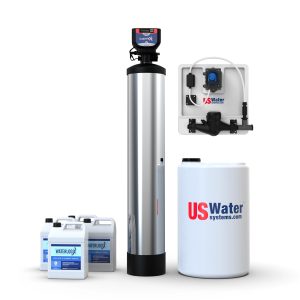
If you’re narrowing down the best US Water Systems filter shortlist for home-wide comfort, this whole-house filter focuses on chemical reduction across the home. It targets chlorine and chloramine, and it’s built for the kind of everyday wins people care about: water that’s more pleasant to drink and cook with, and showers that don’t fill the room with that sharp “treated water” smell.
The day-to-day difference shows up in the little moments. Your morning coffee tastes cleaner because you aren’t steeping it in strong chemical flavor. Cooking feels more straightforward because boiling water doesn’t bring that same edge into the steam hovering over the pot.

Showering is another big “quality of life” area for a whole-house chemical filter. This system is built to reduce chlorine vapors that rise with hot steam, so the bathroom air feels easier to breathe when the water’s running hot. That’s one of those details you notice most when you close the door, turn the shower on, and the room normally fills with odor.
Inside the tank, you’re working with a blended media approach. It uses KDF 55 along with catalytic carbon and a coconut-shell GAC media, which gives the system a layered way to handle chemical reduction. [1] The media is also infused with copper and zinc to prevent microbial growth, so the filter bed stays in a healthier state over time.
Flow is where whole-house filters either feel invisible or become annoying. This one uses full 1-inch inlet and outlet ports and is rated for up to 25 gallons per minute peak flow. That translates to a home that still feels “normal” when someone showers while dishes run or laundry starts—your water keeps moving the way you expect it to.
Maintenance stays fairly clean and predictable. There’s a 5-micron sediment pre-filter you change every 6 to 12 months in normal use, and the carbon media is meant to be re-bedded every 5 to 7 years to keep chemical reduction on track. It also carries WQA-certified components that meet NSF/ANSI Standard 61 and 42 compliance, and it includes a one-year satisfaction guarantee, which adds a practical layer of confidence if you’re upgrading your whole-home setup.
Pros:
Cons:
If you’re comparing the best US Water Systems water filter contenders for whole-home purification, this reverse osmosis system moves beyond “one drinking faucet” and into true whole-house treatment. It’s built to reduce TDS throughout the house, so the water feeding your kitchen, bathrooms, and appliances goes through the same core purification approach.
This setup includes recycle and blending functionality, which helps shape the final water you’re using day to day. In practical terms, you’re working with a system designed for whole-home consistency, so you aren’t juggling different water “zones” in the house.
Production rate is a big deal with whole-house RO because it determines how the system feels during busy hours. You can choose 4,000, 6,000, or 8,000 gallons per day, which lets you match the unit to your household’s demand instead of hoping a smaller system keeps up. When you’re running showers, laundry, and kitchen use close together, that output headroom becomes the difference between “smooth living” and “waiting for the system.”
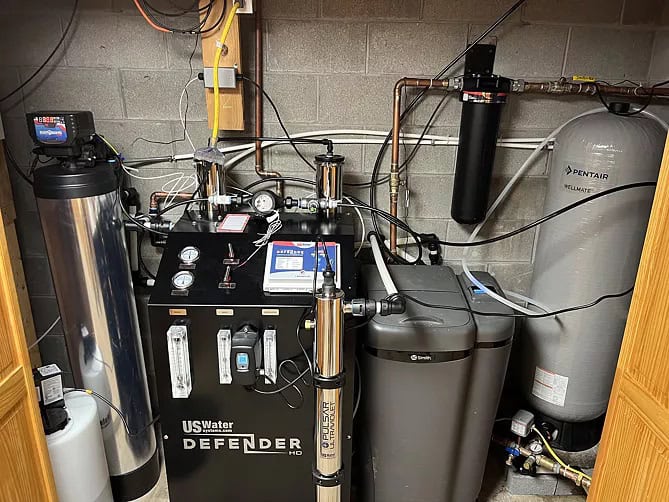
Storage is the other half of the experience, and this system gives you multiple routes. You can pair it with a 140-gallon atmospheric holding tank, a 250-gallon tank, or even two 250-gallon tanks if your household needs a larger buffer. A float switch turns the system on and off based on tank level, so the RO production runs in the background while you just use water normally.
Pre-filtration helps protect the more sensitive parts of the system, and it starts with a 5-micron sediment pre-filter. That filter captures dust, dirt, sediment, and larger particles, so the system isn’t forcing its most precise components to do messy work. The pre-filter housing uses a double O-ring seal to prevent bypass and includes stainless reinforced connections, which supports steady, reliable flow through the intended path.
On the finishing end, there’s a Pulsar ultraviolet disinfection system as the final step. It includes an LCD display for bulb status plus a bulb change indicator, so you don’t have to guess when maintenance is due. The stainless chamber carries a lifetime warranty, which is a meaningful ownership detail for a component that lives at the “final safety check” point of the system.
You can also add an automatic anti-scalant injection system that runs with a food-grade concentrate. It’s designed to prevent limescale buildup and extend system life, which matters when you’re investing in a larger RO setup. There’s also a pH boost option using a neutralizing solution designed to protect copper, brass, and other soft metals, so you can tailor the system to your home’s needs without turning it into a constant project.
Pros:
Cons:
If you’re here for a US Water Systems water filter review because your water smells like sulfur or leaves iron stains behind, this setup is built for that specific battle. It uses continuous hydrogen peroxide injection and pairs it with catalytic carbon media, so iron, manganese, and hydrogen sulfide get oxidized and handled during filtration. [2] The payoff is simple: water you want to use again—brushing your teeth, washing dishes, and running a shower without the odor hanging in the air.
The system’s treatment targets are clearly defined for the problems it’s meant to solve. Typical contaminant removal is listed up to 20 ppm iron, up to 30 ppm hydrogen sulfide, and up to 1 ppm manganese. That gives you a real sense of whether your issue sounds like a “light nuisance” or something heavier that calls for a more serious approach.
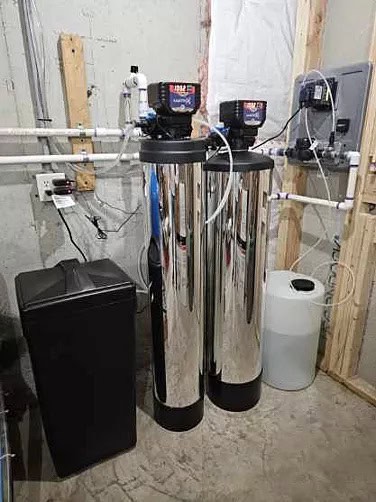
It’s built to work effectively within a pH range of 6 to 9, and it’s listed as working with iron- and sulfur-reducing bacteria. That matters when your water problems feel layered—staining, odor, and biological activity all mixed together—because the system fits the reality that well water doesn’t always show up with just one clean, simple issue.
Ownership feels more manageable because the setup comes as a complete loop. You get a 15-gallon peroxide tank, a precision injection panel, the inFusion filter, and 10 gallons of H2O2, so you’re not piecing together the core treatment elements one by one. In normal use, that “everything is included” approach removes a lot of friction from getting started.
Performance stays on track through automatic cleaning routines. An internal meter counts gallons used and monitors flow rates, and the system runs automated backwashing approximately every two days to clean the catalytic carbon bed. For the most extreme cases, daily backwashing is included as a supported behavior, so the cleaning cycle can match heavier demand when needed.
The electrical and control side is built around low-hassle, low-voltage ownership. It runs on 12-volt operation and is listed as using less than $2.00 of electricity per year, so it doesn’t feel like a constant “running cost” burden. Battery backup keeps memory during power outages, and the smart valve connects to your phone over Bluetooth so you can set timing and cycle behavior without standing over the equipment. This system fits best when odor and staining are the driving issue and you want a solution that works quietly in the background once it’s dialed in.
Pros:
Cons:
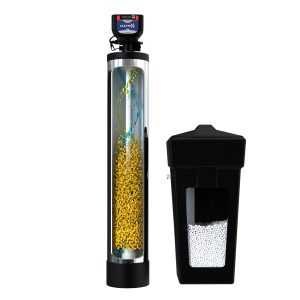
If you’ve been reading US Water Systems water softener reviews because hard water is your main frustration—scale buildup, spots, and that constant film on fixtures—this smart metered softener changes the feel of your home fast. Softening swaps out the minerals that form crust in pipes and appliances, so you spend less time scrubbing and your water-using equipment gets a smoother job day after day.
The daily “quality of life” impact shows up where hard water annoys you most. In normal use, you see fewer spots on faucets and shower glass, and you deal with less chalky residue in places like sinks and tubs. Over time, it supports the routines you want—showers that feel more straightforward, dishes that rinse cleaner, and less buildup on the stuff you touch every day. [3]

What sets this system apart is how you manage it. It uses a WQA Gold Seal Certified smart control valve that connects to your phone over Bluetooth 5.0, and it works with the Legacy View app. That means you can check water use, regeneration cycles, and salt levels from your phone instead of guessing or walking out to the equipment.
You can adjust the hardness setting right in the app, which is a practical advantage when you want the water to feel a certain way in real life. You aren’t stuck with a “set it once and hope” approach—you make a change, then you live with the result at the sink and in the shower. The internal design keeps things simpler, too, with a single internal moving part supporting that “steady, low-drama” ownership experience.
Sizing is where you match the system to your household, and it offers clear choices. You can choose a 10, 15, or 20 GPM service flow configuration, so your water doesn’t feel restricted during busy times. Maximum softening capacity ranges from 35,000 to 70,000 grains depending on the model, and it operates within a 20 to 100 PSI working water pressure range and a 39° to 100° Fahrenheit water temperature range.
Maintenance stays grounded in the basics, and the system supports that routine with practical safeguards. The brine tank holds up to 220 pounds of salt, and it includes an internal float and safety overflow, so you get protection around the refill and regeneration process. It runs on low voltage and includes battery backup, so it holds its settings through power blips. Warranty coverage includes a lifetime warranty on the tank and resin and a 10-year warranty on the valve and electronics, which fits well if you want long-term confidence with modern monitoring built in.
Pros:
Cons:
The goal of this guide in this US Water Systems review roundup is to help you choose the right “type” of system first—then narrow down the option that fits your home and habits. When you match the treatment method to your real-life problem, everything gets easier: the water feels better, the maintenance makes sense, and you stop second-guessing the purchase.
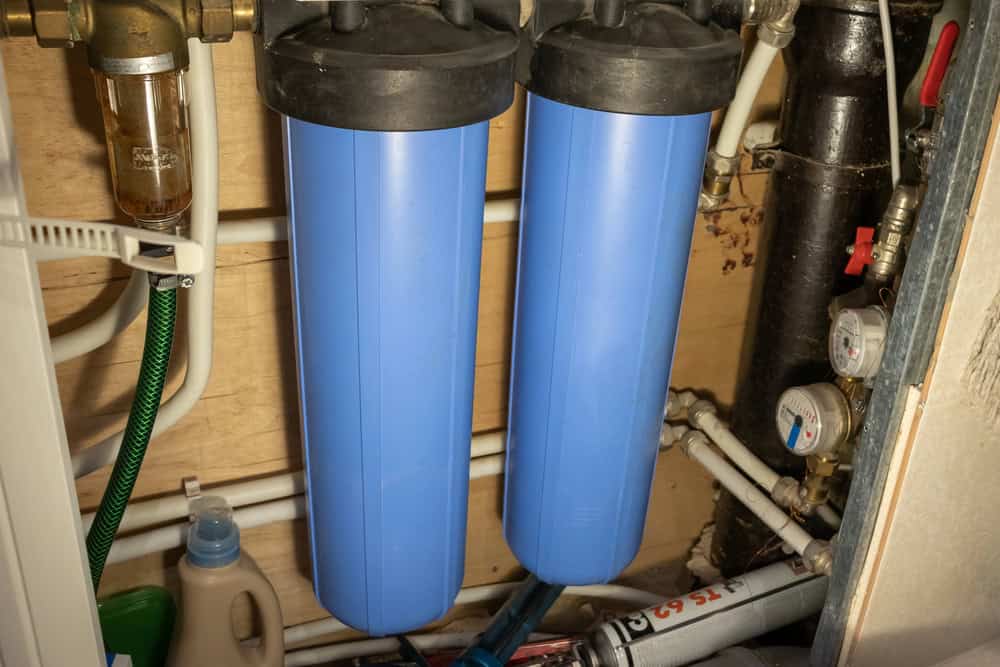
Start by being honest about where the problem lives in your day, because that’s the heart of most US Water Systems reviews. If the biggest pain shows up when you drink water, make coffee, cook, and refill bottles, an under-sink reverse osmosis system with its own faucet keeps the solution focused. You walk up, pour a glass, and you get the water you want without changing every shower and every laundry load.
If the frustration shows up everywhere—shower steam, kitchen cooking water, general smell, or a household-wide chemical taste—whole-home treatment makes more sense. A whole-house carbon filter changes the experience across every tap, and a whole-house RO setup goes even further by treating water throughout the home with a high-output approach plus storage.

Try to name the “headline symptom” you’re living with. If you’re dealing with odor that resembles rotten egg and stains that look like iron trouble, a peroxide injection system paired with catalytic carbon is built for that scenario. It treats the issues at their source, so you stop bracing yourself every time you turn on the water.
If the issue is hard water—spots, scale, and constant buildup—a smart metered softener fits that lane. Softening targets the minerals behind crust and film, so the home becomes easier to keep clean in normal use, and appliances don’t fight buildup as hard.
If the issue is chemical taste or that pool-like smell, a whole-house carbon system that targets chlorine and chloramine lines up with what you’re trying to fix. That’s the kind of change you notice quickly in drinking water and cooking, and it also changes how shower steam feels in the bathroom.

Performance doesn’t matter as an abstract number—it matters when the house is actually running. For whole-home filters, flow and port sizing shape whether showers and kitchen use still feel normal. A system rated for strong peak flow with full-sized ports is the difference between “I forgot it’s even there” and “why does everything feel slower?”
For whole-house reverse osmosis, output and storage run the show. Higher production rates help you keep up with a busy household, and tank size determines how much buffered water you have ready to go. When multiple people shower, laundry starts, and the kitchen gets active, storage plus smart on/off control based on tank level keeps the system feeling steady instead of strained.

The best system is the one you’ll keep running correctly without resentment. Under-sink RO often feels easy because you interact with one faucet, and the system’s included TDS meter gives you a simple way to spot-check water quality whenever you want that peace of mind.
Whole-house carbon filtration usually asks for two rhythms: changing a sediment pre-filter on a routine schedule and planning for long-interval media refresh. That balance works well if you like “small upkeep now, big upkeep later” rather than constant tinkering.
If you like visibility and control, app-based monitoring makes ownership feel calmer. Being able to check salt levels, view regeneration cycles, and adjust hardness settings from your phone turns the softener into something you manage with quick glances instead of guesswork. For more complex treatment—like peroxide injection and backwashing—Bluetooth-based control and battery-backed memory help keep things consistent without you hovering over the equipment.
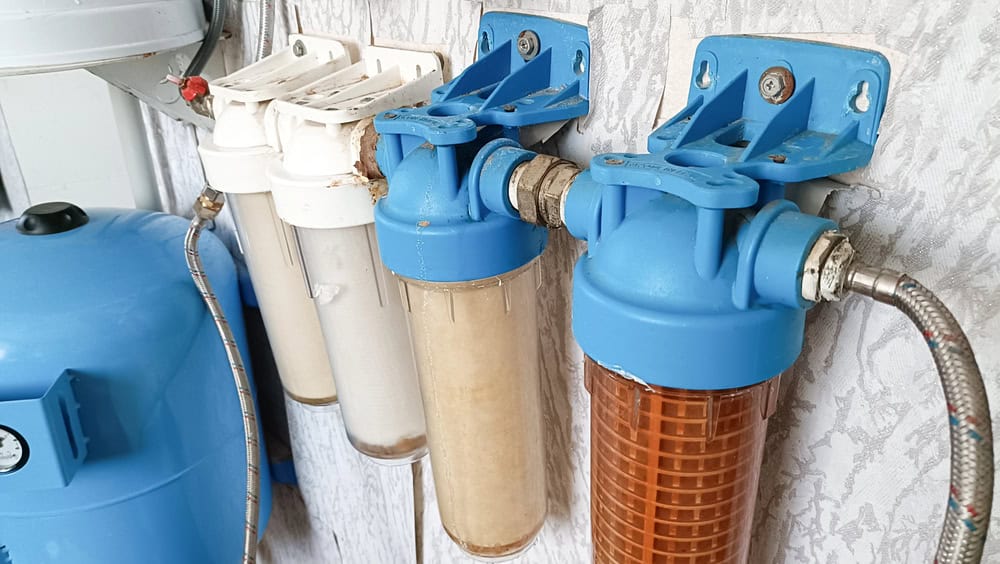
Some add-ons are about safety and predictability, while others are about protecting the system itself. UV disinfection as a finishing step gives you a clear “final barrier” mindset, and a display with bulb status plus a change indicator removes the guesswork from lamp upkeep.
Anti-scalant injection and pH boost options are more about system protection and compatibility. If you’re building a whole-house RO setup, preventing limescale buildup supports long-term stability, and pH adjustment designed to protect copper, brass, and other soft metals helps align the system with your home’s materials. The best approach is to choose add-ons that match a real concern you have, so you end up with a setup that feels purposeful rather than complicated.
If you want the most noticeable upgrade to drinking and cooking water, start with the under-sink reverse osmosis system. The dedicated faucet, multi-stage filtration, and 4.5-gallon tank make daily refills and kettle fills feel easy, and the optional remineralization stage fits well if you prefer a more mineral-style taste.
If chemical taste and shower steam are the bigger headache, the whole-house carbon filter is the clean, home-wide move. It targets chlorine and chloramine, supports strong peak flow, and keeps upkeep straightforward with a sediment pre-filter routine plus long-interval media refresh.
If you’re aiming for RO-treated water throughout the home, the high-output whole-house RO system stands out for its production choices, storage flexibility, and UV finishing step with clear bulb monitoring. It’s the right fit when you want a more comprehensive approach and prefer a system that runs steadily in the background.
If your water problem is odor and staining, the peroxide injection system paired with catalytic carbon is the most direct match. It targets the issues that make water hard to live with, then supports ongoing performance through automated backwashing and app-based control.
And if scale and spots are the reason you’re here, the smart metered softener is the “make life easier” pick. App monitoring plus adjustable hardness settings give you control without fuss, and the higher flow configurations support a home that runs normally even during busy times.
When you’re ready to choose, scroll back up to the product list and start with your main goal—better drinking water, whole-home comfort, odor and staining control, or hard-water relief. Once you frame it that way, this US Water Systems comparison gets much easier, and the best pick usually becomes obvious.