This article may contain affiliate links. I may earn a small commission at no extra cost to you. Learn More

Menu

Well water is great—until it isn’t. If you’re trying to pick the best under sink water filter for well water for your kitchen, you’ve probably had that moment where a glass looks fine, but something tastes off, or you spot a little grit after it sits.
This best under sink water filter roundup helps you narrow down an under-sink setup that fits how you actually use water in your kitchen. You’ll see which systems focus on steady, everyday filtration, which ones lean into full reverse osmosis purification, and where extras like UV and remineralization change the day-to-day experience.
To build this list, I compared product details carefully to find strong under-sink options that make sense for well-water routines—drinking, cooking, ice, and bottle refills—without turning your kitchen into an ongoing project.
If you’re sorting through the best under sink water filters for well water shortlist and you want an under-sink reverse osmosis setup that feels built for the long haul, this one leans hard into ownership confidence. You get a 5-year warranty, a one-year satisfaction guarantee, and lifetime technical support, so you’re not left guessing if you run into questions after install. That kind of support matters when you’re relying on your own water source and you want the drinking-water system to feel dependable.
The system is designed to make under-sink work less fussy. Color-coded connections keep the install more straightforward, and the kit includes practical extras like a filter wrench, Teflon tape, and color-coded tubing with a tube cutter. That means you spend less time improvising and more time getting to the “first clean glass of water” moment.
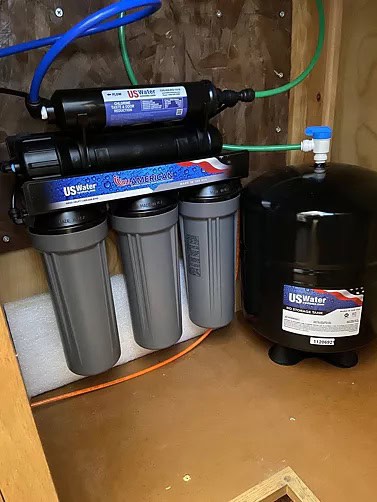
It uses a multi-stage approach that’s easy to understand in real life: each stage handles a job, and the water gets cleaner step by step. Stage 1 is a sediment filter for larger particles like dirt and rust, so you’re not pushing grit into the rest of the system. That translates to cleaner water at the faucet and a setup that’s better protected from the messy side of well water.
The carbon stages handle the “kitchen taste and chemical” side of the equation. Stage 2 uses a carbon block to reduce chlorine and other chemicals, and Stage 3 adds a sub-micron carbon block that targets chloramine and PFAS through extended contact. The result is drinking water that feels more consistent—especially helpful when your water quality shifts over time.
Then the reverse osmosis membrane takes over for dissolved solids like heavy metals and fluoride, followed by a post-carbon stage that polishes taste. In practice, this is the kind of system that supports the things you do every day—filling bottles, making ice, cooking, and brewing coffee—without your water becoming a constant question mark.
You can choose faucet finishes or even go with a “no faucet” configuration, so it’s easier to match the system to your sink setup. There’s also a 6-stage alkaline option available that adds minerals back and balances pH, which is a nice fit if you prefer RO water that doesn’t feel overly stripped when you drink it straight.
Pros
Cons
If you’re looking for the best under sink filter for well water when pressure is the pain point, this system is built around that reality. It includes a pre-installed booster pump that brings water pressure up to a level the RO process likes, so the system feels more consistent at the faucet. That means your under-sink drinking water doesn’t feel like a slow, “wait for it” trickle when you’re trying to fill bottles or top off a pot.
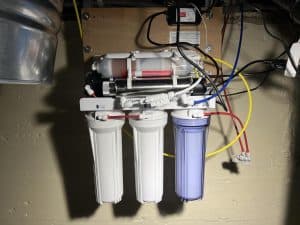
You’re working with a 7-stage under-sink RO system rated at 100 GPD, which frames it as a more complete purification-style setup rather than a basic carbon filter. The pump is positioned to support how the system runs in everyday use—production speed and drain ratio are part of that goal—so the overall experience feels more stable when your incoming pressure isn’t ideal.
The seventh stage is UV, and that’s a big deal for well water. UV is specifically called out as a recommended choice when you’re filtering water from a well or directly from a natural body of water. So you’re pairing reverse osmosis purification with an added finishing step aimed at the kind of water source you’re dealing with.
This system also includes an alkaline remineralization stage that neutralizes pH and adds minerals back into the RO water. It uses a blend of red mineral stone and calcite, so the water lands closer to a “bottled-style mineral water” feel instead of tasting flat. [1] You notice that most when you drink water plain or when coffee and tea are part of your daily routine.

From a setup perspective, you get a lead-free solid brass faucet in a brushed nickel finish as your main output point. You can route the output to a refrigerator, ice maker, or coffee maker, so your “good water” reaches the places you actually use it. That makes the system feel less like a single faucet upgrade and more like a kitchen-wide drinking water improvement.
Finally, it gives you clear boundaries for matching it to your situation: incoming water pressure is listed at 30–70 PSI, operating temperature is 40–100°F, and the maximum TDS is 750 ppm. You also get a 1-year money back guarantee, a 1-year limited warranty, and lifetime technical support, which helps the whole purchase feel less risky.
Pros
Cons
This is a strong fit for anyone shopping the best under sink water filter system for well water contenders and aiming for a complete under-sink drinking station. You get a 7-stage reverse osmosis setup rated at 100 GPD, a 3.2-gallon tank, and a premium chrome faucet. That means your kitchen gets a dedicated drinking-water source that’s ready for everyday use—cooking, coffee, and nonstop bottle refills.
The front end is built to deal with the gritty side of well water first. It starts with a 5-micron sediment filter for sand, dirt, and rust, so you’re not pushing those particles into the rest of the filtration stack. In real life, that helps your water feel cleaner and keeps the system focused on purification rather than constantly battling debris.

The carbon stages handle taste and chemical cleanup before water reaches the RO membrane. You get granular carbon and a carbon block, aimed at reducing chlorine, VOCs, and other chemicals. So the water starts smelling and tasting cleaner early in the process, which is exactly what you notice first when you pour a glass.
Then the RO membrane targets dissolved contaminants and heavy metals, including arsenic and copper. That creates a cleaner baseline for drinking water, which is especially useful when your well water changes with seasons or rainfall. Instead of relying on “it seems fine,” you get a more controlled result at the faucet.
After purification, this system focuses on how the water feels when you actually drink it. A coconut-shell post carbon stage polishes taste, and an alkaline stage using calcite adds minerals back so the water doesn’t come across as overly stripped. That translates to a smoother experience for plain water, tea, and anything where flavor stands out.
The final layer is UV sterilization that targets bacteria and viruses, which adds another level of reassurance for well water. [2] On the setup side, the system requires 45 PSI to operate, and if you’re below that, a booster pump is recommended, with a pump option available. You also get practical install items like a feed adapter, drain saddle, color tubing, a housing wrench, a TDS meter, and a leak stop valve, plus a 3-year warranty for ownership confidence.
Pros
Cons
If you’re choosing in the best under sink well water filter category and your priority is a filtered faucet that still feels “normal” to use, this system is built around flow and everyday convenience. It’s rated for a 0.72 gpm service flow, so filling a pot or topping off bottles doesn’t feel like a slow chore. That’s a big quality-of-life win if you want filtered water to become your default, not a special tap you avoid.
It’s rated for up to 800 gallons or up to 6 months of use, which frames it as a steady kitchen workhorse. You get a predictable ownership rhythm—use it daily for drinking and cooking, then swap filters on a simple schedule. That consistency matters when you’re on well water and you want a stable “safe lane” for the water you ingest the most.
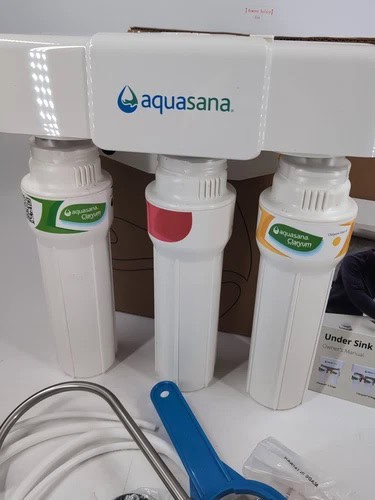
The system starts with a 5-micron pre-filter that captures rust, sediment, and silt. That helps when your well water occasionally kicks up particles, because you’re catching the gritty stuff before it moves deeper into the system. In practice, you notice cleaner water and a filtration stack that’s better protected from the messy side of well water.
After the pre-filter, two Claryum filters combine activated and catalytic carbon with ion-exchange, sub-micron filtration, and an organic adsorbent booster. The benefit is a broad, kitchen-focused cleanup without turning your under-sink cabinet into a complex RO station. It also retains naturally occurring minerals like calcium, potassium, and magnesium, so the water keeps a more natural character when you drink it.
For trust signals, it’s tested and certified to NSF/ANSI Standards 42, 53 (includes P473), and 401, which gives you a clear benchmark for reductions. It’s certified for reductions including 99.995% of cysts, 99.6% of microplastics and lead, 99.7% of PFAS (PFOA/PFOS), 97.3% of chlorine, and 91% of chloramines. The PFAS testing is referenced down to 20 parts per trillion under NSF’s newer protocol, which supports a more serious level of reassurance for the water you drink and cook with.
Maintenance stays simple. The system alerts you when it’s time to change filters, and replacements twist off without disconnecting hoses or water lines. It operates across 20–80 psi and 40–90°F, and the supplied T-fitting is 3/8”, so it fits many common home setups without turning installation into a puzzle.
Pros
Cons
If you’re narrowing down the best under the sink water filter for well water front-runners, this option is all about making under-sink reverse osmosis feel modern and less demanding day to day. It installs under the sink with a dedicated drinking-water faucet, so you always know which tap is for clean water—glasses, cooking, and bottle refills. That dedicated setup keeps your drinking water routine simple and consistent.
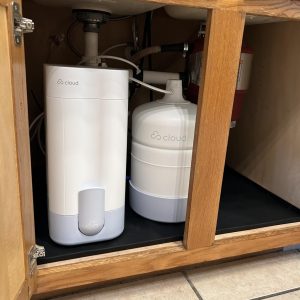
One of the standout design choices is the internal hydraulic pump that maximizes water pressure. That’s especially useful when you want the system to support a line to a fridge or ice maker without feeling like you’re pushing the limits. The end result is an under-sink RO experience that fits real kitchen habits instead of forcing you to slow down.
Cloud is NSF 58 certified, which aligns it with RO-style purification expectations. It’s positioned to remove 99% of toxins, including PFAS, lead, fluoride, pesticides, and pharmaceuticals. In practical terms, this is a “reset button” approach for drinking water—helpful when your well water varies and you want a more stable result in the glass.
It doesn’t stop at purification, either. There’s an integrated remineralization stage that adds trace minerals like calcium, magnesium, and potassium, so the water doesn’t land flat. [3] That means you get a cleaner finish for everyday drinking and a more natural taste when you brew coffee or tea.
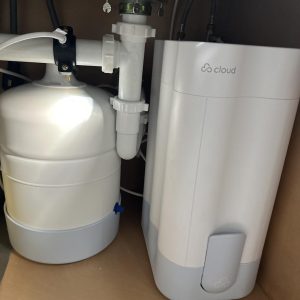
For convenience, it stores clean water in a 2.8-gallon holding tank, so you’re not timing every glass around production. Internal sensors track water quality and consumption and send that information to the Cloud app, which makes it easier to understand your usage patterns instead of guessing. That kind of visibility is particularly appealing when your water source isn’t controlled by a municipal utility.
Installation stays friendly to typical under-sink spaces because it’s battery powered, so you don’t need an electrical hookup under the cabinet. The package includes the Cloud RO system, holding tank, stainless steel faucet, filter cartridges, and battery pack, so you’re not piecing together essentials after the fact. Filter changes are guided through the app, and a typical replacement cadence for a family of four is every 9–12 months, which keeps ongoing maintenance from feeling constant.
Check out my full Cloud RO review if you'd like to learn even more.
Pros
Cons
This buyer’s guide helps you match the right under-sink approach to your well-water situation, your kitchen habits, and the kind of maintenance routine you actually want to live with.

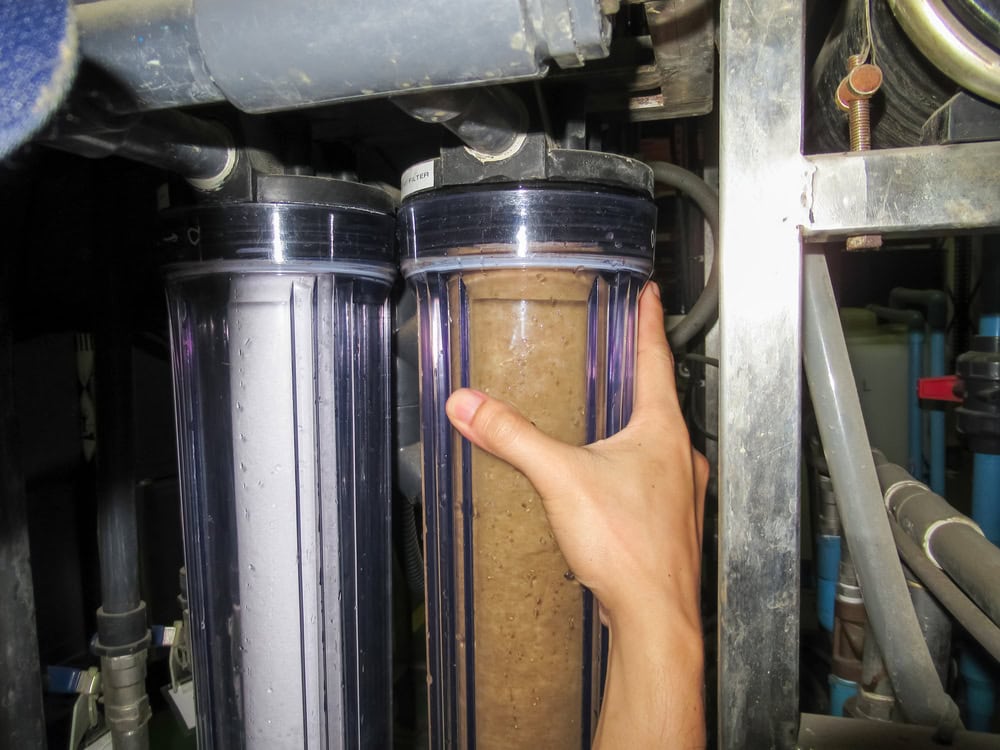
Before you settle on the best well water under sink filter for your kitchen, get clear on what you’re noticing from the tap. Some well-water issues are visible—grit, silt, and rust that show up in the bottom of a glass or when you rinse produce. If you notice that, prioritize a setup that starts with sediment control, because catching particles early keeps your drinking-water lane cleaner and supports the rest of the filtration process.
Other issues are less obvious but still affect daily life, like “off” taste, odd odors, or the feeling that you want a stronger purification step for drinking and cooking. When your concerns are more about what’s dissolved in the water, a reverse osmosis-style system gives you a deeper clean that feels more consistent across seasonal changes.
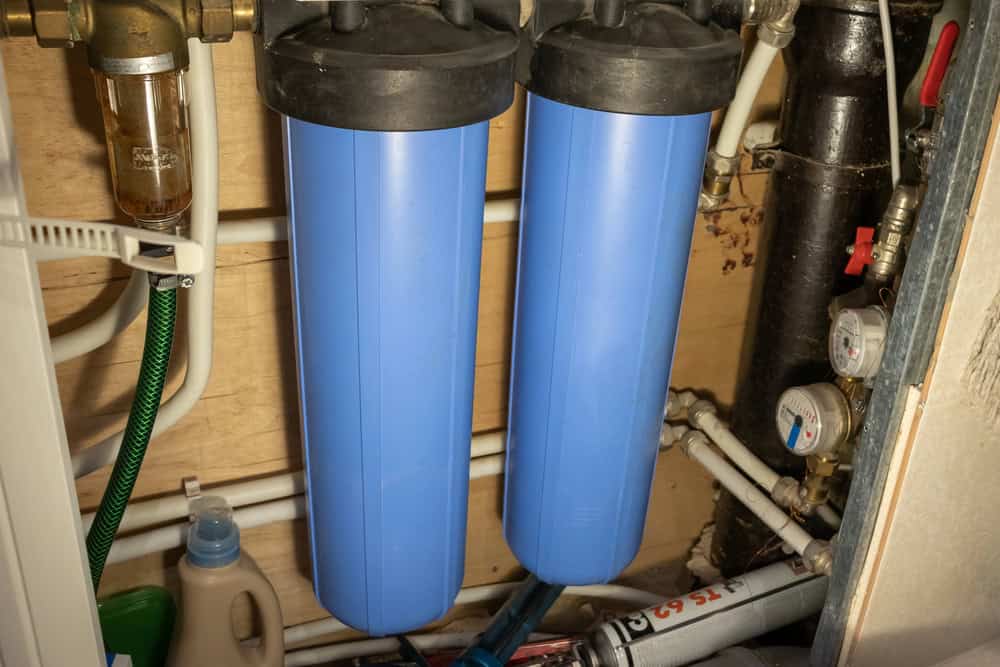
A high-flow under sink water filter for well water is the easiest way to make filtered water your default. When the faucet feels normal, you naturally use it more—for cooking pots, big bottles, and constant refills. That’s a strong fit if you want cleaner-tasting water and a simple routine without moving into full RO territory.
Reverse osmosis systems take a different approach. They add stages and typically use a holding tank, so you get a dedicated drinking-water source with a more intensive purification style. The payoff is a cleaner baseline in the glass, especially useful when well-water quality swings and you want more predictability.
Well-water pressure isn’t always stable, and that’s where system design really matters. When you’re comparing the best under sink water filters for well water setups, pay attention to how the system handles pressure in everyday use. If you already know pressure is a weak spot, an RO setup with a booster pump built in helps you avoid the “slow faucet” frustration that makes people stop using their system.
Even if your pressure is generally fine, it’s still worth checking the operating requirements of the system you’re considering. When the system and your water conditions match, daily use feels effortless—refills happen when you need them, and the system works in the background instead of demanding attention.

UV is a meaningful add-on when you want an extra confidence layer for well water. If you like the idea of a sterilization step included as part of the system, it’s easier to choose a model that builds it in rather than trying to reinvent your setup later.
Remineralization changes how RO water feels when you drink it. If you don’t like water that tastes “flat,” a remineralization stage brings back a more natural finish that’s noticeable in plain water and in coffee and tea. If you love the ultra-clean taste of RO as-is, you may not care about that step as much.
Some systems make maintenance feel almost invisible through alerts or guided filter changes. That’s helpful when you want the system to tell you what it needs rather than relying on memory.
Other systems keep maintenance straightforward through easy-to-understand stages and practical install choices. The best pick is the one that fits your habits—because the simplest routine is the one you’ll actually keep.
If you want a long-term under-sink RO setup with strong ownership confidence, the US Water Systems reverse osmosis system stands out for warranty coverage, lifetime technical support, and a clear multi-stage design.
If pressure is the pain point in your home, the iSpring RCC1UP-AK is the most direct fit, thanks to the pre-installed booster pump and the built-in UV stage aimed at well-water use.
If you want an all-in-one under-sink RO “drinking station” feel with UV and an alkaline stage, NU Aqua is a strong match—especially if you’re planning around the listed pressure requirements.
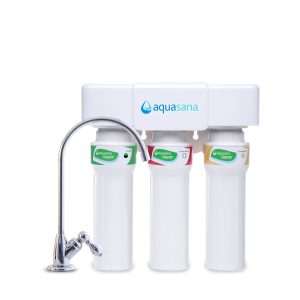
If you’d rather keep the experience closer to a normal, fast filtered faucet while still leaning on certified reductions and easy twist-off maintenance, Aquasana Claryum 3-Stage Max Flow is the practical everyday pick.
And if you want an RO setup that blends NSF 58 alignment, a pressure-maximizing internal pump, app visibility, and a battery-powered install, Cloud RO fits the “modern under-sink system” style.
Your best move now is to choose the best under sink water filter for well water for your needs, then match it to your cabinet space and the routine you’ll actually keep. Scroll back up to the product list, narrow it down to the few that fit your situation best, and make your final pick with confidence.