This article may contain affiliate links. I may earn a small commission at no extra cost to you. Learn More

Menu

PFAS shopping feels different than shopping for “better-tasting water.” You’re not just trying to make your tap water nicer to drink—you’re trying to feel confident about what’s getting removed when you’re narrowing down the best water filter for PFAS shortlist for your kitchen.
This roundup helps you choose a PFAS-focused setup that fits the way you actually live. You’ll see options that range from a simple fridge pitcher to countertop systems and under-sink RO, plus a whole-house filter for people who want treated water at every tap.
To build this list, I compared product information carefully to find strong options that match PFAS concerns, everyday usability, and realistic maintenance routines—without relying on vague promises or spec overload.
If you want a dedicated drinking-water lane at the kitchen sink, Cloud RO sits among the best PFAS water filter setups for that kind of day-to-day clarity. It installs under your sink and runs to its own drinking-water faucet, so your filtered water feels like a separate “clean water tap” you use for filling bottles, cooking, and coffee.
The internal hydraulic pump keeps pressure strong, which changes the experience immediately. You don’t end up babysitting a weak trickle when you’re topping off a bottle or filling a pot. Instead, the system is set up to feel steady and practical during normal kitchen rush moments.
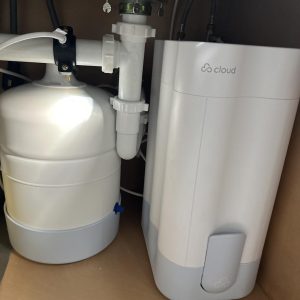
For PFAS confidence, this system ties into NSF/ANSI 58 system certification, which fits the reverse osmosis category. It uses a four-stage filtration path and an RO membrane rated to filter down to 0.0001 microns, so you’re working with a setup designed for the tiny dissolved contaminants that make PFAS so frustrating.
The PFAS result that matters most to many shoppers shows up clearly here: PFOS and PFOA reduction is shown at 99.9%. That translates to a cleaner baseline every time you reach for the dedicated faucet—especially when PFAS is the reason you started shopping in the first place.
Daily output and storage shape how this feels over time. You get a 2.8-gallon holding tank for ready-to-pour water, plus a system rating of up to 50 gallons per day. In normal use, that means you’re pulling from stored clean water for the busy moments, instead of waiting for filtration with every glass.
Ownership stays modern and low-drama. It runs on battery power, so you don’t need an electrical hookup under the sink, and internal sensors track water quality and consumption through an app. Filter replacement is framed as a typical 9–12 month rhythm for a family of four, so maintenance feels like an occasional routine rather than a constant chore.
Pros:
Cons:
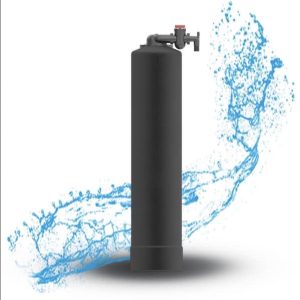
If you want PFAS-focused treatment to show up everywhere—not just where you drink—this whole-house style is a strong fit for people comparing the best water filters to remove PFAS paths for a home-wide goal. It sits at the point where water enters your home, so showers, laundry, dishwater, and every sink run through the same core filtration route.

The system uses advanced catalytic carbon media paired with a next-generation upflow design. The practical takeaway is more contact between water and filtration media while maintaining high-flow capability, so your house doesn’t feel “restricted” when multiple taps run. [1]
This filter is positioned to reduce PFAS along with chlorine, chloramine, and pesticides, which suits shoppers who want broader home-wide treatment. It also uses “up to 99% impurities” language tied to its overall approach, so you’re thinking in terms of whole-home consistency rather than a single drinking station.
Convenience is part of the appeal here because the setup runs without daily involvement. It operates without chemicals, without electricity, and without wastewater, so you don’t plug it in or manage a drain line to keep it working.
The ownership story leans hard into long-run simplicity. It’s tested to filter 600,000 to 1,000,000 gallons under typical situations, with media life framed as up to 6 to 10 years. That means the “filter routine” largely disappears once it’s installed, which is exactly what many whole-house shoppers want.
To round out peace of mind, there’s a lifetime limited warranty. In practice, that helps this feel like a set-and-settle choice for people who prefer a long-term home upgrade rather than a small countertop routine.
Pros:
Cons:
AquaTru Carafe fits the “serious treatment without plumbing” sweet spot, especially if you’re narrowing down the best filter for PFAS contenders for a countertop routine. You plug it in, load the filters with a twist-in style, fill the tap-water tank, and let it run—so you get a reverse osmosis approach while keeping your sink and cabinets untouched.
The pace is built around batch-making clean water instead of instant flow. It produces 1 gallon in about 12 to 15 minutes, which works well when you like to run a cycle while you cook or tidy up, then pour clean water through the evening.
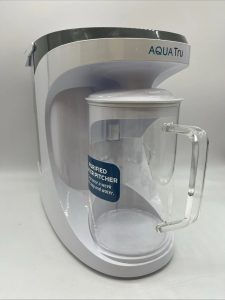
Inside, the system uses a patented four-stage reverse osmosis process. The benefit is straightforward: you’re leaning on RO-style purification that targets a wide range of contaminants, including PFAs, so your drinking and cooking water starts from a cleaner baseline.
Everyday convenience comes from how it guides you through ownership. A digital display gives you filter-change alerts, and one-touch dispensing keeps refills feeling simple rather than fussy. The clean-water tank removes easily and stores in the fridge, which makes cold, purified water feel as normal as grabbing a pitcher.
Maintenance stays predictable because the replacement rhythm is clearly laid out. The pre-carbon filter changes every 6 months, the VOC filter runs about 1 year or 600 gallons, and the RO filter goes up to 2 years or 1,200 gallons. That structure makes it easier to stay consistent, which matters when PFAS is your main motivation.
Portability is another quiet win. At about 9 pounds, it’s a countertop solution you can move with you, so your PFAS routine doesn’t disappear just because you change apartments or kitchens.
Pros:
Cons:
If you want a countertop routine that feels fast and “tap-like,” this is the kind of water filter for PFAS removal setup that keeps pace with busy days. It’s powered, and it delivers an 8-ounce glass in about 8 seconds, so your filtered water keeps pace with real life.
The removable 1-gallon glass tank changes how it fits into your routine. You lift it, fill it, set it back—so you’re not wrestling a bulky appliance every time you need more water. That makes it easier to keep the system in rotation for cooking, coffee, and everyday drinking.
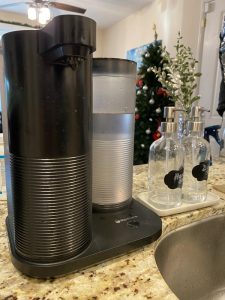
PFAS shoppers usually want something more concrete than “trust me.” Here, the system is WQA tested and certified to NSF/ANSI Standards 42, 53 (including P473), and 401. The practical benefit is a clearer framework for what the unit is built to reduce, which helps you shop with less guesswork.
Capacity is part of what keeps ownership from feeling constant. It’s rated for 300 gallons, which means filter changes don’t dominate your calendar in normal use. That steady cadence matters when you’re trying to build a routine you’ll actually stick with.
The filtration method combines activated carbon and ion exchange, which helps cover a wider range of contaminants. [2] It’s also designed to retain minerals like calcium, potassium, and magnesium, so your water keeps a more natural “water” character rather than tasting overly stripped.
Maintenance stays tidy and practical. Filter swaps are designed to be quick, and the base uses an auto-stop approach that shuts off water flow when you lift the tank away—so you don’t end up wiping up countertop puddles during refills.
Pros:
Cons:
If you want the simplest possible start, the best water filters for PFAS list almost always includes at least one pitcher-style pick for good reason. Clearly Filtered’s pitcher routine is familiar: fill it from the tap, keep it in the fridge, and pour when you want cold water without turning your kitchen into a project.
The size supports real daily use without constant refilling. It’s a 10-cup, 80-ounce pitcher, which is enough to keep a couple of bottles topped off, cover cooking water, and still have chilled water waiting for you.
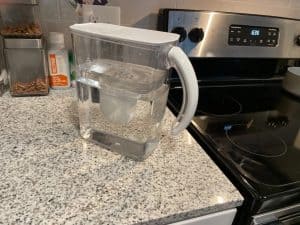
PFAS performance is the reason this pitcher earns attention. It shows better than 99% reduction for key PFAS targets: PFOS is shown at greater than 99.5%, PFOA at greater than 99.0%, and GenX at greater than 99.44%. [3] That means the pitcher isn’t just about taste—it’s a practical way to reduce PFAS exposure in your everyday drinks.
It also ties into a set of well-known standards: NSF/ANSI 42, 53, 401, and 473. For you, that functions as a stronger trust signal when you’re comparing PFAS options that otherwise look similar from the outside.
The filtration approach uses a three-stage design, starting with a screening layer that blocks larger particles and sediment before water reaches the main media. The benefit is that the filter stays focused on the harder-to-catch contaminants, so the pitcher experience feels more consistent over time.
Material details matter when you’re storing water for daily drinking. The pitcher uses medical-grade Tritan and is BPA- and BPS-free and phthalate-free, so your “clean water plan” doesn’t come with extra plastic concerns. It’s also easy to handle at about 2.8 pounds empty, which makes pouring feel normal even when you’re half-awake.
Pros:
Cons:
This short guide helps you match the right PFAS-focused filter style to your home, your daily habits, and the kind of maintenance you’ll actually keep up with.

Start by picking the form factor that fits your life, because that decision sets everything else. A fridge pitcher keeps things simple and low-commitment, while a powered countertop machine prioritizes speed and a more dispenser-like feel.
If you want a dedicated faucet for drinking and cooking water, an under-sink RO setup creates a clear “filtered water lane” right where you use it most. And if you’re trying to pick from the best water filter for PFAS choices for every tap in the house, a whole-house filter aligns with that home-wide mindset.

PFAS shopping gets easier when the product lines up with recognizable certification frameworks rather than vague language, especially when you’re browsing the best PFOA water filter category for peace of mind. In this roundup, you’ll notice systems tied to NSF/ANSI standards such as 42, 53 (including P473), 401, 473, and NSF/ANSI 58 for RO. Those markers help you compare options with more confidence.
Don’t treat standards as abstract badges. Use them as a way to keep your shortlist grounded—especially when multiple products promise similar outcomes but your goal is to reduce PFAS, not just change taste. [4]

Numbers matter most when they connect directly to what you do every day. If you pour water constantly throughout the day, fast dispense timing or a ready-to-pour holding tank changes how easy it feels to stick with filtered water long-term.
If you prefer batch-making water, a countertop RO carafe that produces a gallon in a defined window fits naturally into cooking time or evening routines. And if you want a system that supports busy households, daily production ratings and storage capacity help you picture how often you’ll refill, not just what the unit claims to do.

The “best” PFAS filter is the one you’ll maintain without resentment, and even the best PFAS filter won’t feel worth it if the routine turns into a weekly annoyance. Filter-change alerts, structured replacement timelines, and clear routines reduce the mental load, so your system stays effective without constant guesswork.
Think about where you want maintenance to live. Some people prefer quick cartridge swaps, others want a long-run whole-house approach with multi-year media life. Either way, the goal is the same: a routine that stays simple enough that you keep doing it.
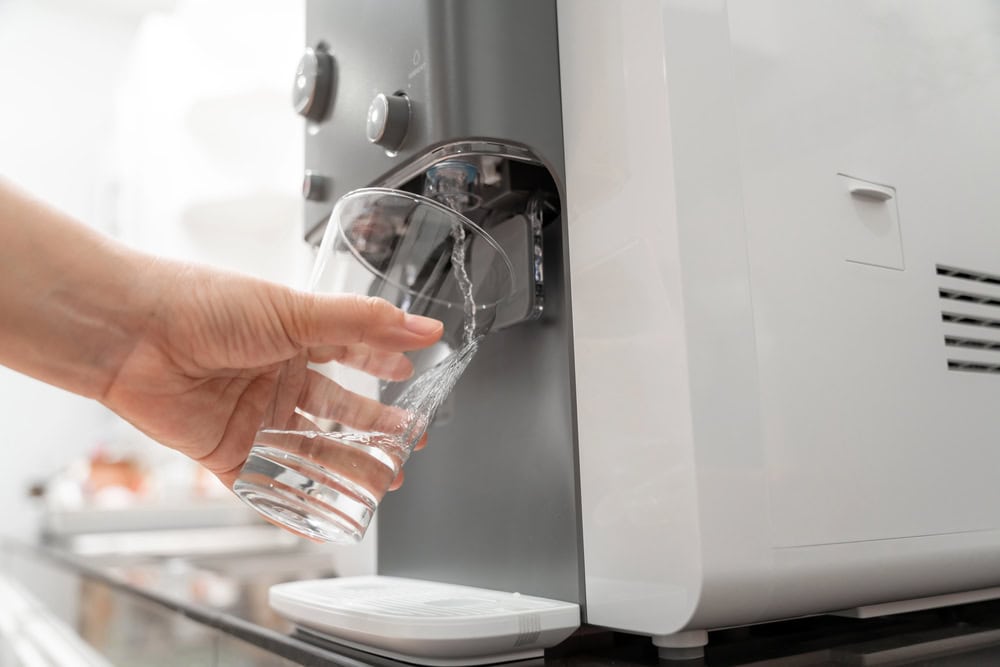
Drinking and cooking water is a focused target, and under-sink RO or countertop systems fit that goal neatly. You get a consistent routine at the kitchen, which is where most PFAS-focused decisions show up in daily life.
Whole-house filtration is a different promise: you’re aiming for a more consistent experience everywhere, including showers and laundry. That’s the right direction when you want the water across your home to feel unified, not split between “filtered” and “everything else.”
If you want the strongest day-to-day PFAS confidence at the kitchen sink, Cloud RO is a great fit for people who like a dedicated faucet, a stored supply in a holding tank, and a system built around NSF/ANSI 58 with a clear PFOS/PFOA reduction figure.
If you want treated water throughout the home, SoftPro Chlorine+ Carbon Whole House Water Filter suits the “every tap” mindset, especially if you value an approach that runs without electricity, chemicals, or wastewater and is built around long media life.
If you want RO-style purification without touching plumbing, AquaTru Carafe makes sense for people who prefer a countertop batch routine, fridge-ready storage, and a structured filter replacement schedule that stays easy to follow.
If you want a fast, dispenser-like countertop experience, Aquasana Clean Water Machine fits shoppers who care about quick pours, a long 300-gallon rated capacity, and WQA testing tied to NSF/ANSI standards.
And if you want the simplest low-commitment start, Clearly Filtered Water Pitcher works well for people who want strong PFAS reduction numbers in an easy fridge pitcher format.
Your best choice comes down to how you’ll use it: pitcher simplicity, countertop speed, RO confidence at a dedicated faucet, or whole-home coverage. If you’re trying to land on the best water filter to remove PFAS for your routine, scroll back up to the product list, pick the setup style that fits your day, and choose the option that you’ll maintain without friction.