This article may contain affiliate links. I may earn a small commission at no extra cost to you. Learn More

Menu

Shopping for an iSpring system usually starts with one nagging moment—and if you’ve been reading an iSpring water filter review after another, you already know how quickly it gets confusing. Your water smells like chlorine, your kettle scales up too fast, your glassware spots no matter how carefully you rinse, or your coffee just never tastes quite right. The tricky part is that “an iSpring filter” can mean a whole-house setup, a countertop RO station, a softener-and-RO bundle, or a full under-sink RO system with extra finishing stages.
This roundup breaks down five popular iSpring options by what they’re built to do and what that feels like in daily use—so you can pick the right approach for your home, your space, and the kind of water issue you’re actually trying to solve.
I compared the key details across these iSpring systems to find strong options for common real-life needs—whole-home filtration, hard water control, and better-tasting drinking water with RO. Below, you’ll see what each one does best, what it means for your routine, and how to choose between them without getting lost in spec overload.
If your priority is drinking and cooking water that feels “separate” from the rest of your tap water, this is where iSpring water filter reviews often start to feel more practical. It runs as a dedicated system with its own brushed-nickel faucet, so you pour your clean water from one spot and keep your main faucet doing everyday sink work. That separation makes it easy to stay consistent—filling a glass, topping off a bottle, or making pasta water becomes a quick habit.

The install experience leans practical. Quick-fitting connectors let you push tubing into place and lock it in, which speeds up the setup and reduces the “did I tighten that enough?” anxiety. You also get a transparent first-stage housing, so you can actually see the sediment filter loading up over time. That visual cue makes maintenance feel obvious instead of mysterious.
Filtration starts with a straightforward front end designed to protect the RO stage and keep performance steady. The pre-filters include a PP sediment filter, a carbon KDF (GAC) filter, and a carbon block (CTO) filter, so you catch debris early and reduce chlorine and chloramines before the water reaches the membrane. [1] In daily use, that helps the system stay consistent and keeps your output water tasting cleaner.
The RO membrane filters down to 0.0001 microns, which is exactly why it ends up on the best iSpring reverse osmosis system shortlist for kitchens that care about clean, neutral water. You notice it most when you drink the water plain or use it for coffee and ice. You end up with a cleaner baseline for anything flavor-sensitive, and you get a more predictable result across the week. The system is rated for 100 gallons per day, so it’s built to serve a household routine without feeling like a slow trickle.

Two finishing touches shape the “final glass” experience: remineralization and UV. The alkaline remineralization stage uses natural mineral stones to add back healthy minerals and create balanced alkalinity, so your RO water tastes more natural instead of flat. Then the UV stage runs with a smart Flow Sensor Switch that turns the UV on and off automatically with a 3-minute delay, which saves power and helps extend UV lamp life. Put together, it’s a strong fit when you want fast under-sink RO that feels complete from filtration to taste.
A booster pump rounds out the ownership experience if your pressure runs low. It’s designed for low-pressure situations and is positioned as a good match when your pressure is below 40 psi, so you don’t get stuck with sluggish RO production. It’s also paired with a pure-to-drain ratio rated up to 1:1.5, which supports a less wasteful routine while keeping output steady.
Pros:
Cons:
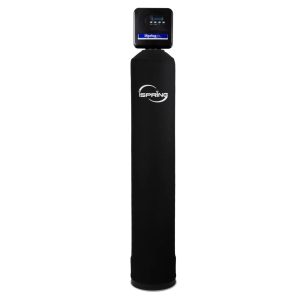
If you want one of the best iSpring water filter contenders for whole-house coverage, this is the style of system built to feel invisible once it’s in place. It installs at the main water entry, so the water feeding showers, laundry, and every faucet runs through the same treatment path. The result is a more consistent “whole-home” change—less of that strong chlorine presence and fewer moments where one tap feels different from the next.
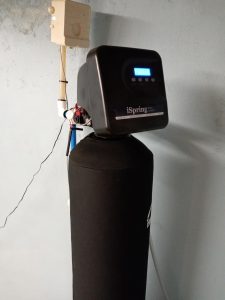
It’s designed for long-term, higher-capacity use, and it’s meant to keep up with a busy household. With a listed peak flow rate of 26 GPM, it aims to preserve normal water feel even when multiple fixtures run close together. So you’re not planning your shower around the dishwasher or tiptoeing around peak usage.
Performance-wise, it targets a broad list of common concerns—chlorine, lead, heavy metals, pesticides, herbicides, and VOCs—so you get a wide-angle approach instead of a single narrow fix. It’s tested to meet NSF/ANSI 42 and 53 standards, which gives you a confidence signal that’s easy to understand when you’re making a whole-house decision. In practical terms, it’s built to deliver cleaner water for daily life, not just one “drinking water” faucet.
The reduction numbers are especially relevant if you want a system with clear direction on what it tackles. It lists reductions like up to 99.9% chlorine, 99.8% chloramine, 99.4% lead, 98.9% mercury, and a 99.96% reduction in asbestos. [2] That’s the kind of coverage that shows up as a more pleasant overall water experience—bathing, cooking, and washing all feel more consistent.
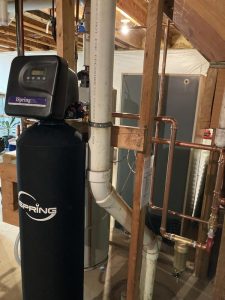
Ownership leans into automation so you don’t have to manage it like a weekly chore. The filtration media gets back flushed and regenerated on set cycles through a digital smart control valve, which keeps the system refreshed without constant attention. You can set personalized auto-flush intervals based on your incoming water and your usage pattern, and you can trigger immediate regeneration with a few button presses if you want to take control.
Longevity is part of the appeal here. It’s designed to last 10 years for homes with 2–3 bathrooms or 5 years for homes with 4–5 bathrooms, and it comes with a 10-year warranty. It also helps extend the lifespan of plumbing and appliances like washing machines, dishwashers, and water heaters, so the “whole-home” choice can feel like a steady upgrade that supports the rest of your setup.
Pros:
Cons:
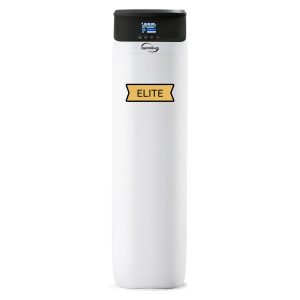
In an iSpring filter review lineup, this bundle is the one built for the “two-problem” home: hard water throughout the house and a desire for cleaner drinking water at the sink. It pairs a whole-house softener with a point-of-use under-sink RO system, so you address scale and spots broadly while keeping your drinking and cooking water on a separate, extra-clean track. That pairing tends to feel more complete than trying to force one system to do everything.
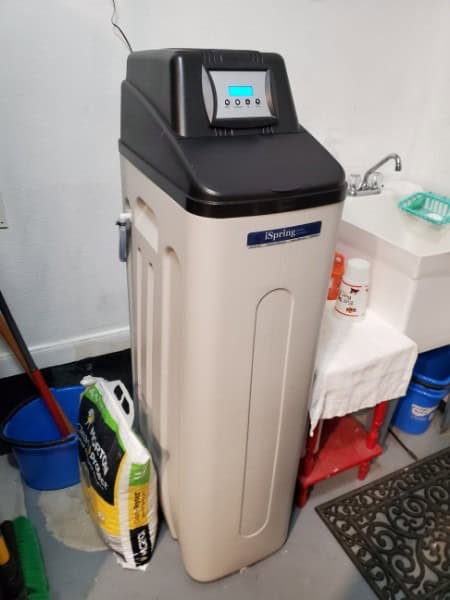
On the softener side, the WCS50KG treats up to 50,000 grains of hardness. In real life, that’s about protecting fixtures and appliances from scale buildup and making routine cleaning feel less like a constant battle. You notice it when you’re wiping down a faucet, rinsing glassware, or trying to keep a showerhead from crusting up. [3]
The softener’s controls are built for “set it and live your life.” An advanced control valve handles automatic regeneration, so you’re not babysitting a calendar. A low salt reminder gives you a simple heads-up, and vacation mode keeps things sensible when you’re away. Those small touches matter because they turn hard-water control into a background routine instead of a project.
For drinking and cooking water, the RO5004F takes a tankless approach. It’s rated at 500 GPD and uses a built-in pump, which supports faster delivery and stronger pressure when you’re filling a pot or topping off bottles. Because it’s tankless, you save under-sink space and avoid the “waiting for a tank to catch up” feeling that some RO setups bring.
The filtration process focuses on the everyday water you actually consume. It uses a 6-layer filtration design that removes chlorine, taste, odor, and sediment, and it removes up to 99% of over 1,000 harmful contaminants—including chlorine, lead, PFAS, arsenic, and fluoride. That means you get a cleaner baseline for drinking, cooking, coffee, and ice—where water quality shows up quickly.
There’s also a practical reason the bundle works well together: softening swaps hardness minerals with sodium or potassium, and pairing it with RO strips out that added sodium along with other dissolved solids. So you end up with low-sodium drinking water at the sink while still getting the whole-home benefits of softening. Modular filters with tool-free replacement and real-time filter life monitoring keep the maintenance side manageable, so the long-term routine feels straightforward.
Pros:
Cons:
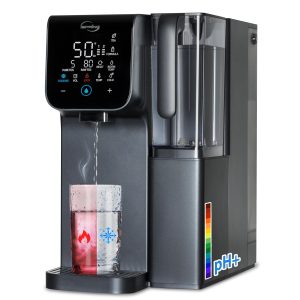
If you’ve been scanning iSpring water systems reviews because you want RO water without touching your plumbing, this countertop system keeps the commitment low and the routine simple. You place it where you have a power outlet, and it fits naturally in a kitchen, office, or even an RV. That flexibility matters when you don’t want an under-sink install or you just prefer a “set it on the counter and go” style.
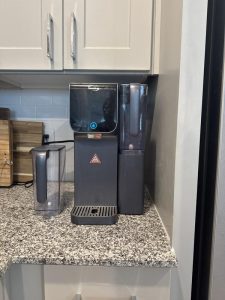
What makes it feel different day to day is the hot-and-cold experience. It uses thermoelectric cooling for a quieter run, and you get 9 temperature options plus 6 dispensing volume options. So you stop guessing—fill a mug at a set temperature for tea, then switch over and pour chilled water for a bottle without hovering and measuring.
The dual-pitcher setup is built around convenience rather than waiting. One pitcher can live in the fridge while the other stays in the system, so cold water is always ready to grab. Because one pitcher stays operational, you keep moving through your day instead of standing around for a refill cycle to finish.
On treatment, it’s an alkaline reverse osmosis system that eliminates over 99% of 1,000 contaminants, including PFAS (PFOA and PFOS), vinyl chloride, chlorine, fluoride, lead, arsenic, asbestos, calcium, and sodium. That translates into water that feels more trustworthy for everyday drinking and anything you cook where water flavor comes through. It’s not just “better taste”—it’s a broader cleanup that supports a more consistent result.
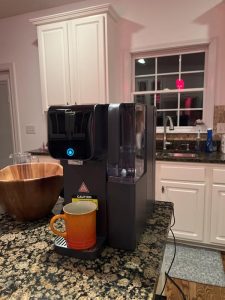
The system also gives you feedback that’s easy to read at a glance. A smart panel tracks both source-water and filtered-water TDS in real time, so you see the before-and-after rather than guessing whether it’s working. Low water level reminders, a temperature display, and a child safety lock make the daily experience feel more controlled, especially if you plan to use hot dispensing often.
Maintenance stays structured and readable. The stainless steel mesh filter gets brushed clean every 3 weeks, the composite filter is rated up to 12 months, and the RO membrane is rated up to 24 months. Twist-and-lock changes and filter life monitoring keep replacements from turning into a sink-side project, which is exactly what most people want from a countertop RO station.
Pros:
Cons:
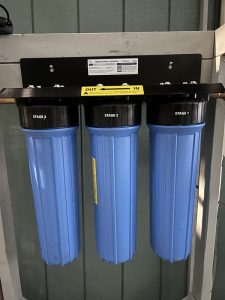
If you want a simpler whole-house approach, a lot of iSpring reviews land here because it improves water everywhere without a complicated routine. It installs on the main water line, so it supports the water you use for showers, laundry, dishes, and cooking. If your goal is a cleaner, more pleasant baseline throughout the house, this is the style of system that makes sense.
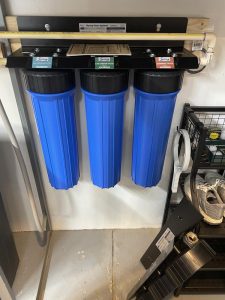
Its filtration path stays easy to understand. The first stage is a sediment filter rated down to 5 microns, which helps catch fine grit and rust before it reaches your fixtures. That means fewer surprises in faucet screens and less of that “something’s in the water” feeling when you fill a pot.
The next two stages focus on taste and smell. You get two CTO carbon block filters made with coconut shell carbon, which are aimed at improving taste and odor and cutting chlorine. So your water smells cleaner at the tap, and everyday basics like brushing teeth or making ice feel more pleasant. [4]
Flow and plumbing compatibility matter with a whole-house filter, and this one is set up to keep your water feeling normal. It uses 1-inch NPT inlet and outlet connections and is rated for up to a 15 GPM peak flow rate. It’s also designed to work across a 25 to 80 psi pressure range, which supports stable performance in normal household conditions.
The ownership routine is one of its biggest strengths. It’s set up for a 100,000-gallon capacity—roughly a year’s supply—and in normal use you’re typically swapping cartridges about every 6 to 12 months. Individually wrapped cartridges keep replacements clean and straightforward, so upkeep feels like a simple task instead of a messy chore.
If you want a whole-house filter that focuses on sediment and chlorine-related taste and odor, the WGB32B fits that lane. It’s a practical pick when you care about a steady, house-wide improvement and you want the maintenance to stay predictable.
Pros:
Cons:
If you’ve read more than one iSpring water filter review and still feel torn, this buying guide helps you match the right iSpring category to your water problem, your space, and the kind of daily routine you actually want. Instead of chasing the longest feature list, you’ll get clearer decision points that lead you to a setup you’ll enjoy using.

Start by choosing between whole-house impact and point-of-use precision. A whole-house system treats water at the main entry, which means your shower, laundry, and every faucet benefits. If you want “one decision that improves the whole home,” a whole-house filter or softener-based approach fits that goal.
Point-of-use systems focus on the water you drink and cook with. When you’re sorting through iSpring water filter reviews for a kitchen-only upgrade, under-sink and countertop RO options give you a dedicated lane for bottles, coffee, ice, and meals. That’s often the smarter route when your main frustration is drinking water quality rather than the feel of water throughout the house.
If you’re stuck between the two, consider how you experience the problem. If you notice it mostly at the kitchen sink, focus on RO. If you notice it in cleaning, bathing, or water spots on everything, whole-house treatment will feel more satisfying.
For broad “taste and smell” improvement across the home, a whole-house carbon-and-sediment setup gives you a cleaner baseline without changing your habits. That’s the appeal of a three-stage whole-house filter: your water smells better and feels more consistent, and you don’t have to think about it every time you turn on a tap.
If hardness and scale are the core issue, a softener is the direct answer. It addresses the minerals that create buildup and spotting, and that change shows up in the places you clean the most. When you pair softening with under-sink RO, you also keep your drinking water clean and low-sodium, which is a compelling combo for homes that want both outcomes.
For drinking water that feels as clean as possible, RO is the main tool. Countertop RO fits if you want hot-and-cold convenience and you don’t want a plumbing project. Under-sink RO fits if you want a dedicated faucet, a steadier daily flow, and a more “built-in” drinking water routine.

Whole-house systems live and die by how they feel when the home is busy. If you have multiple bathrooms or you expect overlapping use, a higher peak flow design will feel more natural. That’s why systems with clearly stated peak flow performance can be easier to live with—your shower and sink still feel like your shower and sink.
For under-sink RO, pressure and production speed shape the experience. A booster pump matters most when your household runs low pressure—especially under 40 psi—because it helps the system keep up. You notice that benefit when you’re filling bottles, topping off pots, or just trying to move quickly through a morning routine.
Countertop RO is a different rhythm. The convenience comes from set temperatures, measured dispensing, and a simple placement decision. If you want “hot water for tea and cold water for bottles” without plumbing changes, you’re choosing for routine more than raw flow.
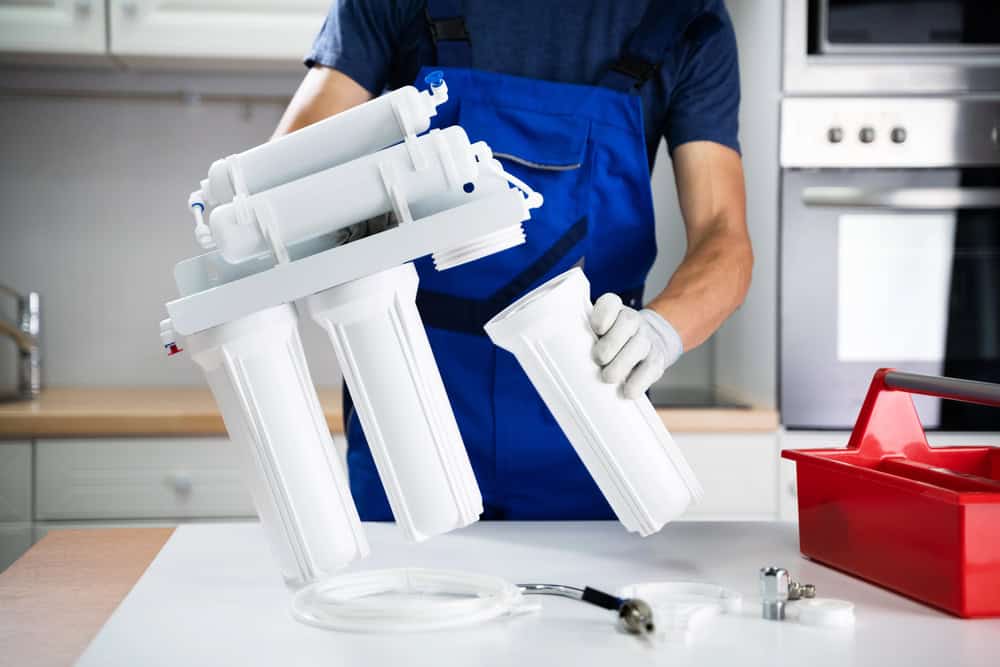
Some systems win because upkeep stays predictable. If you like low-effort ownership, look for a clear replacement rhythm and design choices that keep changes clean and quick. Individually wrapped cartridges, twist-and-lock filters, and filter life monitoring all reduce friction—so you stay consistent without reminders turning into a chore.
Whole-house systems often feel easiest when they run in the background. Digital control valves that manage back flushing and regeneration on set cycles keep the work off your plate. When you can also set auto-flush intervals to match your household, the system feels personalized rather than demanding.
With countertop RO, maintenance becomes a simple recurring task: brushing a mesh filter on a schedule and swapping filters when their rated life is up. When the system shows you TDS before and after filtration, you get a clear sense of timing and performance, which makes the routine easier to trust.

If you want extra reassurance for a whole-house purchase, standards testing and long warranties are meaningful signals. A system tested to meet NSF/ANSI 42 and 53 gives you a clearer view of what it’s built to address, and a long warranty supports the idea that it’s meant to last.
For RO systems, confidence often comes from how complete the “finish” feels. A polishing stage supports better taste, remineralization helps RO water feel more natural, and UV adds an extra layer that’s automated so you don’t have to think about it. The best confidence signal is the one that matches your priorities—taste, routine simplicity, or deeper treatment.
Finally, don’t underestimate the value of visibility. Seeing a sediment stage load up, checking real-time TDS, or getting a low-water reminder makes a system feel more transparent. That transparency tends to build trust over time because you always know what’s happening.
If you want the most complete under-sink drinking water setup in this group, the iSpring RCC1UP-AK is the best fit for a dedicated faucet routine with RO, remineralization, UV finishing, and support for low-pressure homes. If your goal is a high-capacity whole-house solution with strong confidence signals and automation, the iSpring WF150K stands out for busy homes that want treated water at every tap.
If you’re dealing with hard water and you want both whole-home relief and cleaner drinking water, the iSpring WCS50KGRO5004F bundle is built for that two-part problem—softened water for daily life and tankless RO for the sink. If you want countertop convenience with hot-and-cold control and visible performance feedback, the iSpring RCD100HCG fits the “no-plumbing, routine-first” path. And if you want a straightforward whole-house filter focused on sediment and chlorine-related taste and odor, the iSpring WGB32B is a simple, predictable option.
The best choice is the one that matches your water issue and your lifestyle. If you’re still bouncing between an iSpring water filter review and another, scroll back up to the product list above, pick the system type that fits your home, and focus on the routine you’ll actually enjoy using every day.