This article may contain affiliate links. I may earn a small commission at no extra cost to you. Learn More

Menu

Shopping for water treatment is rarely about “better water” in the abstract. It’s about the stuff you notice every day: a chlorine smell when you run hot water, stubborn spots on glasses, a kettle that crusts up fast, or a sink routine that makes you avoid refilling bottles—especially if you’ve been skimming Aquasana reviews and still feel unsure what actually fits your home.
This roundup helps you pick the right Aquasana setup for how you actually use water. You’ll see what each system is built to do, how it fits into your home, and what the ongoing routine looks like—so you can choose with confidence and stop second-guessing.
To build this list, I compared the key technical details that matter for real-life ownership—how each system treats water, how fast it delivers it, what space and connections it needs, and what maintenance looks like over time. The goal is simple: give you clear, practical picks for different home setups and water priorities.
If you’re sorting through Aquasana whole house filter reviews because you want treated water at every tap, the Aquasana Rhino is built for that “whole home” upgrade. This is the kind of system you choose when you don’t want to think about water room by room—your kitchen, showers, laundry, and bathrooms all run through the same treatment point. The big benefit is consistency: you stop playing favorites with one filtered faucet while everything else stays the same.

The Rhino is rated for 1,000,000 gallons or up to 10 years, so you’re setting up a long-lived solution rather than something you revisit every year. That long service window is a quality-of-life win because your routine stays simple for a long time. In normal use, it feels less like “managing a filter” and more like “your home just has treated water.”
Chlorine reduction is one of the headline reasons people shop this style of system, and this one is tested to NSF/ANSI Standard 42 for up to 97% chlorine reduction across its full rated capacity. [1] The practical payoff is straightforward: water throughout the home comes through with less of that chlorine edge. You notice it most in the places where smell matters—like the shower steam, bath time, and running hot water at the sink.
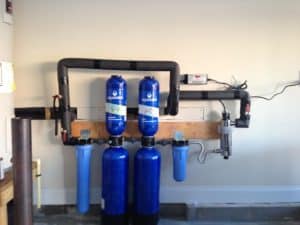
Flow is the make-or-break detail for whole-home systems, and the Rhino is built to keep daily life feeling normal. With a rated flow rate of 7.0 GPM and a peak flow rate of 14.6 GPM, you can run showers and appliances without turning the house into a “who’s using water right now?” negotiation. Aquasana also uses a divider valve designed to keep pressure changes from being noticeable, so the upgrade doesn’t come with a weaker shower tradeoff.
The internal design focuses on steady performance. It uses an upflow, dual-tank approach to increase contact time with the media and help prevent clogging and channeling. That translates to more consistent treatment over time, so you’re not chasing performance dips or weird changes in how the water feels.
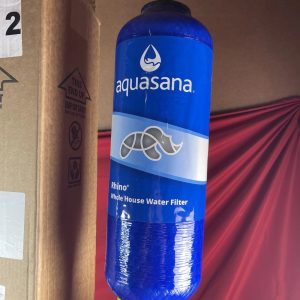
Installation and ownership are also designed to stay uncomplicated. The Rhino runs with no electricity, no drain lines, and no back flushing, so there’s less “system behavior” to babysit after it’s installed. The kit includes what you need for 3/4" or 1" main water lines, plus an integrated drain valve for flushing and draining, along with shut-off and tank connections—so the core setup is built around practical install realities.
If you like the idea of expanding capabilities later, there are add-on directions available. There’s an optional salt-free conditioner designed to reduce scale buildup without salt or chemicals, and an optional UV filter that sterilizes 99.99% of bacteria and viruses and 99% of cysts (tested to NSF/ANSI Standard 55). That gives you a clear path if your water goals expand, without forcing you to start over.
Pros:
Cons:
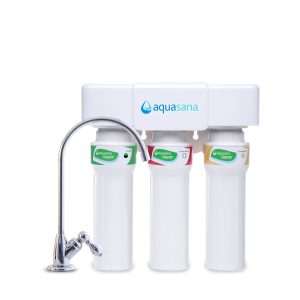
If you want a fast under-sink setup and you’re reading an Aquasana filter review to see whether it fits real kitchen routines, the Claryum 3-Stage Max Flow keeps things focused and practical. This is an under-sink setup with a dedicated faucet, so you get a separate stream of filtered water without changing how your main sink line behaves. The experience feels clean and intentional: one faucet for everyday tap water, one for the water you drink and cook with.

Speed is the point here. With a rated service flow of 0.72 GPM, filling a pot for pasta or topping off a bottle doesn’t feel like a slow drip situation. That higher-flow under-sink style tends to get used more often simply because it keeps up with the way you actually cook and drink.
The filtration stack is designed to stay selective while still being thorough. It starts with a 5-micron pre-filter for rust, sediment, and silt, so the system doesn’t waste its “heavy lifting” stages on grit. After that, the two Claryum stages combine activated and catalytic carbon with ion exchange, sub-micron filtration, and an organic adsorbent booster. The practical result is water that feels cleaner for drinking and cooking without feeling stripped.
Aquasana positions the system as removing up to 99.99% of 78 contaminants while retaining beneficial minerals like calcium, magnesium, and potassium. The everyday benefit is that your water stays pleasant to drink while still feeling “clean,” especially in daily routines like coffee, tea, and cooking. And because it’s a dedicated faucet setup, you tend to reach for it constantly once it’s installed.

Certifications help anchor confidence for a system you use every day. This one is WQA tested and certified to NSF/ANSI Standards 42, 53 (includes P473), and 401. For you, that means the performance targets match widely recognized standards, so you’re not guessing what the system is built to handle.
Maintenance stays simple and predictable. The filter set is rated for 800 gallons and runs on a 6-month replacement rhythm, so your routine is easy to plan. The system alerts you when it’s time to change filters, and the cartridges twist off and on without disconnecting hoses, which makes upkeep feel like a quick swap instead of a plumbing project.
Pros:
Cons:

In a lot of reviews on Aquasana, people are really asking for the simplest path to better-tasting water without committing to an install, and that’s where the Clean Water Machine fits. You plug it in, fill the tank, and you’re dispensing filtered water right where you want it—kitchen counter, pantry shelf, office nook, or anywhere with an outlet. It’s an easy match for renters, smaller spaces, or anyone who simply wants a practical setup that doesn’t touch plumbing.
The big day-to-day win is speed. This unit uses power to push water through filtration rather than relying on gravity, so it feels more like a dispenser than a pitcher. Aquasana states it delivers an 8-ounce glass in 8 seconds, which makes refilling a bottle or making tea feel effortless instead of slow.
Its tank holds 64 ounces, so you get a small reservoir you top up and use throughout the day. That size naturally fits a “refill when you’re already in the kitchen” rhythm. You end up using it more often because the friction is low: fill, dispense, move on.
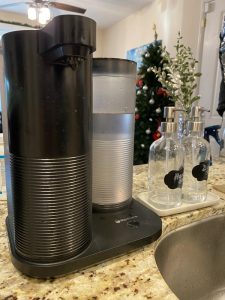
On performance, the system is WQA tested and certified to NSF/ANSI 42, 53 (includes P473), and 401. Aquasana also states removal or reduction rates for several contaminants: over 99% removal of microplastics, lead, and cysts; 97% reduction of chlorine; 96% reduction of mercury; and 95% reduction of PFOA/PFOS and VOCs. In everyday terms, this is the kind of setup you use when you want a clearer, more confidence-inspiring glass for drinking and cooking.
Another practical detail is that it uses Claryum selective filtration and helps retain minerals like calcium, potassium, and magnesium. That matters if you care about keeping water pleasant to drink while still tightening up what you’re taking out. The result is water that’s easy to use all day—straight from the spout, in coffee, or for cooking.
Maintenance is straightforward. The filter is rated for 300 gallons, and the routine is a 6-month replacement or 300 gallons, whichever comes first. That predictable schedule makes it easy to stay consistent without overthinking it.
Pros:
Cons:
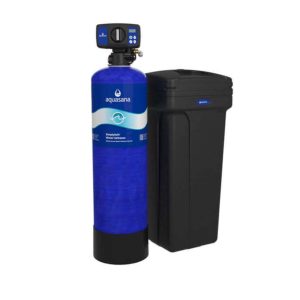
If you’ve been reading an Aquasana review and realizing your problem isn’t just drinking water, it’s hard water behavior across the house, SimplySoft points at a different solution. If your main frustrations are scale, spots, and stubborn soap performance, a softener targets the root issue in a way a drinking-water filter doesn’t. The SimplySoft is built to treat hardness minerals throughout the home using ion exchange, so your showers, dishes, and laundry all benefit at once.

This is the kind of upgrade you notice in the lived-in details—less crusty buildup on fixtures and a smoother day-to-day cleaning routine. Capacity matters because it ties directly to how well the system fits your household. This unit is rated at 60,000 grains, which positions it for larger daily demand.
Flow is another practical piece. With a rated flow rate of 11.1 GPM and a peak flow rate of 16.6 GPM, the system supports the reality of modern homes—showers and appliances running without turning water use into a scheduling exercise. You get softened water across the house while daily life keeps moving at normal speeds.
The control experience is designed to feel more predictable. The LCD panel shows time, regeneration modes, and gallons remaining, so you can understand where you are in the cycle without guessing. And because it runs in metered operation mode, it uses 50% less salt and 28% less water than standard time-based regenerated softeners. The practical benefit is obvious: you refill salt less often and waste less water during regeneration.
Overflow protection adds another layer of everyday confidence. The included brine safety valve helps prevent the kind of “quiet mess” no one wants to discover later. It’s a small detail, but it supports that set-it-and-live-your-life ownership style.

This system also includes a pre-filter to keep rust, sediment, and silt from clogging the softener, which helps the main equipment stay cleaner and perform more consistently. The standard 20-inch pre-filter replacement routine is every 2 months, and there’s an optional low maintenance version that lasts 3X as long with a 6-month replacement rhythm. That gives you a simple choice between more frequent swaps or a longer-stretch routine.
Certifications matter for a whole-home softener because you’re making a big, foundational purchase. This one is IAPMO certified to NSF/ANSI Standard 44 for hardness reduction and to CSA B483.1. That gives you a recognized performance baseline tied to what the system is built to do.
Pros:
Cons:
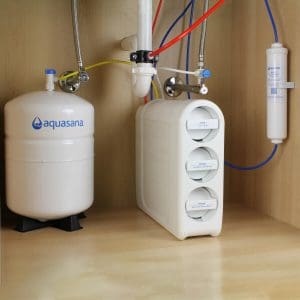
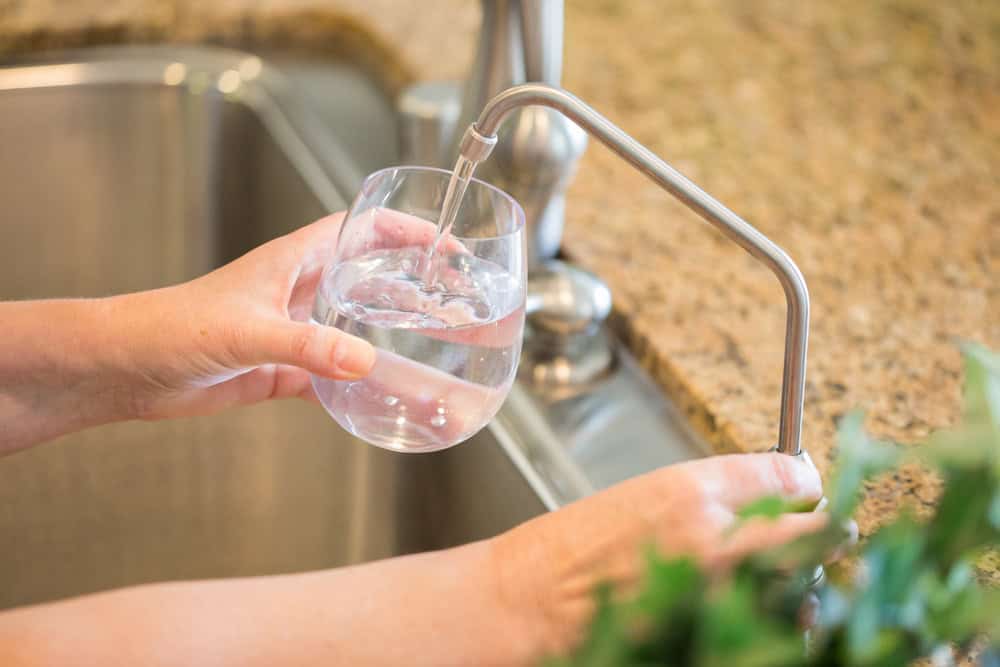
If you’re looking for a detailed Aquasana water filter review focused on drinking and cooking water at the sink, SmartFlow Reverse Osmosis is aimed at that “clean glass” goal. It’s an under-sink system that uses a dedicated all-metal faucet, so you get a separate line for drinking and cooking water. That setup makes your routine simple: pour what you need from the small faucet and move on with your day.
Space is a real under-sink constraint, and this system is designed with that in mind. The chassis is compact and it uses a smaller tank, so you keep more usable cabinet room for what you actually store under there. It’s a practical benefit you feel immediately, especially if your cabinet already feels crowded.
The treatment chain layers multiple stages, and each stage has a clear purpose. Water runs through a carbon block to reduce chlorine, taste, and odor. It then goes through the SmartFlow RO membrane for reverse-osmosis-level treatment, followed by another carbon-based stage for broader contaminant reduction. Finally, there’s a remineralizer designed to improve pH balance and alkalinity, so the water doesn’t feel overly flat in the glass.
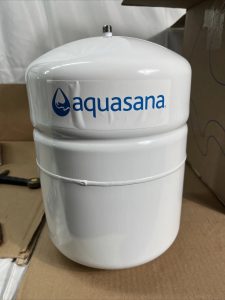
Flow and output numbers help you understand how it behaves in a real household. The system runs at 0.8 gallons per minute for dispensing, so filling a bottle or pot doesn’t turn into a slow drip routine. It’s rated for 25.7 gallons per day, which aligns with typical drinking-and-cooking demand.
The holding tank has a total volume of 3.2 gallons, and the stored water varies from 1.4 to 3.2 gallons depending on inlet pressure—so you typically have a buffer ready when you want water immediately. Certifications help anchor trust for a system built around drinking water. This unit is tested and certified by WQA to NSF/ANSI Standards 42, 53 (includes P473), 58, 401, and CSA B483.1.
Maintenance is laid out in a predictable rhythm, which is what you want with RO. Stage 1 and Stage 3 cartridges follow a 6-month schedule or up to 365 gallons, so you get a clear twice-a-year routine for the core filters. The RO membrane is replaced every 12 months, and the remineralizer typically follows a 6-month replacement depending on usage and water quality. The system also operates within 40–80 psi and 40–100°F, which fits typical household plumbing conditions.
Pros:
Cons:
This guide helps you match the right Aquasana approach to your household reality—where you want treated water, how fast you need it, and how much maintenance you’re comfortable keeping up with.
If you’re trying to pick the best Aquasana filter setup for your home, start by choosing your “treatment zone.” If you want a difference at every tap—kitchen, bathrooms, showers, laundry—you’re naturally looking at a whole-home system like the Rhino. That approach makes the most sense when you want one solution that quietly works across everything you do with water.
If your focus is drinking and cooking, an under-sink setup makes more sense. A dedicated faucet gives you a clear, repeatable routine: filtered water for bottles, coffee, and meals without changing how you use the rest of the sink. And if you want something that avoids installation entirely, a countertop system turns water improvement into a simple daily habit instead of a home project.

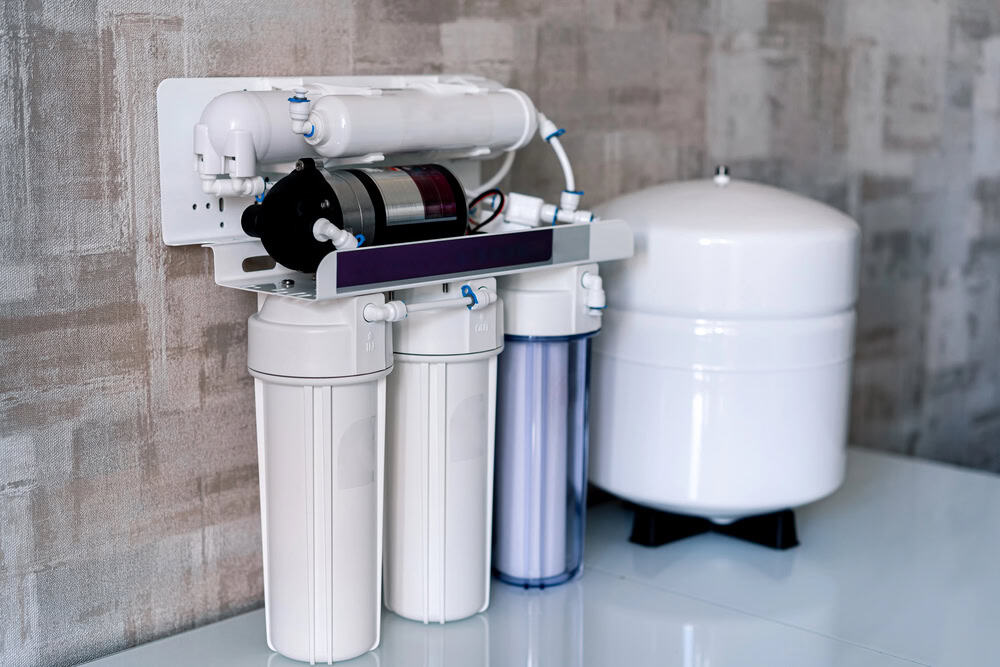
If you’re narrowing down the best Aquasana water filter shortlist, it helps to decide whether your target is deep drinking-water treatment or whole-home water behavior. Reverse osmosis is built for deep drinking-water treatment at the sink, and SmartFlow stacks carbon filtration with an RO membrane and a remineralizer. That combination is ideal when you want a very clean glass and still prefer a more balanced feel for everyday drinking.
If the issue isn’t “what’s in my glass” but “what’s happening everywhere,” hardness is the big dividing line. A softener treats hardness minerals at the whole-home level, which changes the way water behaves in showers, cleaning, and laundry routines. That’s a different goal than a drinking-water filter, and it’s worth separating those needs early so you don’t buy the wrong tool.
When you’re sorting through Aquasana reviews, flow rate is what decides whether you love using a system or quietly avoid it. In the kitchen, higher flow feels like normal life—filling a pot for pasta, topping off a bottle, or making coffee without waiting. Under-sink systems with stronger service flow tend to become the default water source because they keep up with the way you actually cook and drink.
For countertop systems, the routine is about speed and refills. A powered dispenser that pours quickly feels effortless, and a smaller reservoir becomes part of your day—fill it once or twice when you’re already in the kitchen. With whole-home gear, flow becomes a household comfort factor: you want showers, laundry, and dishes to keep running smoothly without needing to “plan” water use.

The best system is the one you maintain without frustration. Under-sink and countertop filters generally follow a predictable swap rhythm, so your job is simply remembering the schedule and keeping a replacement on hand. Systems with alerts make this easier because the reminder is built into the ownership experience.
Softening is a different kind of routine. You’re managing salt as part of normal ownership, and the pre-filter schedule matters too. Metered operation that reduces salt and water use helps keep that routine lighter over time, and longer-life pre-filter options can reduce how often you’re swapping filters. If you want low-friction ownership, it’s worth prioritizing a routine that feels realistic for your home.
If you want treated water everywhere without thinking about it room by room, the Rhino is the clearest fit. It’s built for long service life and strong household flow, so your showers, laundry, and kitchen water all benefit from the same system.
If your priority is fast filtered water at the kitchen sink, the Claryum 3-Stage Max Flow suits a daily cooking-and-refill routine. If you want a plug-in option that behaves like a quick dispenser, the Clean Water Machine fits a countertop lifestyle with a simple refill habit. For whole-home hardness problems that show up as scale and spots, SimplySoft is the system built around that specific job. And if you want deep drinking-water treatment under the sink with a remineralizer, SmartFlow Reverse Osmosis is the most focused pick for that “clean glass” goal.
Your best move is to choose based on where you want the biggest day-to-day difference—whole-home comfort, kitchen speed, or the cleanest drinking-water experience—then scroll back up and compare the list with your space and maintenance preferences in mind, using these Aquasana water filter reviews as your practical starting point.