This article may contain affiliate links. I may earn a small commission at no extra cost to you. Learn More

Menu

If your water smells like chlorine when you fill a glass, leaves spots on your dishes, or builds crusty scale around faucets, the frustration shows up fast—usually right when you’re cooking, making coffee, or stepping into the shower. The hard part isn’t deciding you want better water. It’s choosing the right type of system, because a pitcher, an under-sink filter, a reverse osmosis setup, and a whole-home system solve different problems in very different ways.
This HomeWater filters review breaks down five HomeWater options in plain language, with a focus on what you’ll notice in daily life: how the water tastes at the kitchen sink, how fast you can fill a pot, what your shower and laundry feel like over time, and what maintenance looks like once the “new system” excitement wears off.
To build this list, I reviewed each option’s filtration approach, where it installs (fridge, under-sink, or whole-home), and what ownership looks like over months and years. The goal is simple: help you match a system to your home and your water frustrations without guessing.
If you want one upgrade that touches every faucet in the house, this is the whole-home route—and in these HomeWater filters reviews, it’s the pick that aims for the broadest day-to-day impact. Instead of only improving the water you drink, it treats the water you shower in, cook with, and run through laundry. That means the “better water” feeling doesn’t stop at the kitchen sink.
A big part of the ownership experience is how it handles sediment. You get an 11-inch sediment pre-filter that’s designed to be easy to change, so dirt and rust get caught up front before they end up in fixtures or appliances. The clear housing also makes it simple to glance over and see what’s going on, which takes the mystery out of “is it time to swap this?”

Inside the tank, the design focuses on keeping the filtration media active in normal use. The upflow approach automatically stirs the media without electricity, so the system keeps working without you managing a powered backwash cycle. In day-to-day life, that reads like fewer moments where you feel you need to babysit performance.
Filtration media includes a proprietary blend of red flint, KDF55, and catalytic carbon that targets a wide mix of water issues: chlorine, chloramines, hydrogen sulfide, VOCs, THMs, PFOS/PFAS, heavy metals, turbidity, dirt and rust, and microplastics. The practical payoff is broader coverage across common “why does my water feel off?” complaints, so you notice improvements in multiple rooms instead of only at one tap.
This system is rated for 1,000,000 gallons, so you’re thinking in long-term ownership instead of frequent replacements. The footprint is only 8 square inches, which helps when your install area is tight. It also comes with a neoprene tank sleeve designed to prevent condensation, so you’re less likely to deal with a sweaty tank and damp flooring during humid stretches.
Pros
Cons
If your priority is cleaner-tasting water for drinking and cooking—without changing the look of your sink—this HomeWater filter keeps that upgrade focused and tucked under the counter. It connects directly to your existing faucet line, so your main kitchen faucet becomes the “filtered” faucet. The result is a simple routine: you fill a glass, rinse produce, or top off a pot the same way you always have.
Installation stays approachable. There’s no countertop drilling required, and it’s designed to install in as little as 15 minutes with a self-install kit. That means you get the upgrade without turning your kitchen into a weekend project.

Performance is presented in a way that’s easy to map to real life. It’s certified under NSF/ANSI 42, 53, and 372 for reducing chlorine and lead and improving taste and odor, so your everyday drinking water feels more reliable. The system is also built to greatly reduce chlorine, lead, sediment, VOCs, microplastics, particulates, heavy metals, mercury, chloroform, and cysts, which helps when you’re trying to make one filter handle a lot of typical concerns.
You also get a 0.5-micron nominal filtration rating, which speaks to fine particle capture. In practical terms, you’re aiming for fewer “tiny bits” and less cloudiness in the glass, and a cleaner feel when you’re filling a kettle or rinsing ingredients.
Convenience matters here, too. It runs at a high flow rate of 1 gallon per minute and connects without affecting water pressure, so the sink still feels normal when you’re filling a big pot or rinsing dishes. When it’s time for maintenance, the patented EZChange design keeps filter swaps quick and straightforward, so ownership stays simple instead of fussy.
Pros
Cons
When the main frustration is hardness—scale buildup, soap film, and spots—this is the “whole house feels different” category, and this HomeWater review is the right place to think beyond taste alone. A softener changes how water behaves everywhere, so the improvement shows up on faucets, shower doors, and glassware, not just in a drinking glass.
The system is rated at 22,000 grains, which speaks to its ability to handle hardness minerals. The everyday benefit is simpler: you deal with less crusty buildup and less stubborn spotting, so cleaning feels more like a quick wipe and less like a scrub session.
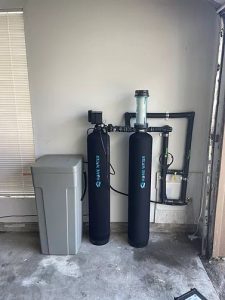
The valve design focuses on keeping the house comfortable during real usage. You get a high-efficiency, high-flow valve designed to support strong pressure while monitoring actual water use. That translates to a home that still feels normal when demand jumps—showers, laundry, and kitchen use don’t need to feel like a balancing act.
Because it monitors usage, it’s designed to save water and salt over time. That matters in ownership because efficiency shows up as less waste in normal use, especially when your household patterns change from week to week. It’s the kind of “quiet win” you notice over months rather than minutes.
Longevity is part of the value story here. It’s rated for a 1,000,000-gallon life—about 8 to 10 years in normal use—so you’re buying for the long run. Materials are positioned for safety, too, with resin certified to US FDA 21 CFR 173.25 and NSF/ANSI 61, so the parts in contact with water meet recognized standards.
Pros
Cons
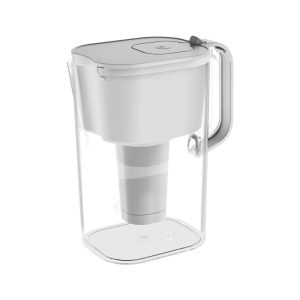
If you’ve been scanning HomeWater reviews for a simple upgrade with almost no setup, the pitcher route keeps things easy. You get a 10-cup (2.4-liter) capacity, so you can fill it once and keep plenty of cold water ready for the day. It’s also designed to fit most fridge doors, which makes it easier to keep it in your routine instead of leaving it on the counter.
The pitcher uses carbon media with an advanced fast-flow design, which keeps filtration from feeling painfully slow. That matters when you’re topping up a glass, refilling a bottle, or trying to get dinner moving. And because carbon filtration improves taste and reduces chlorine and odors, the first thing you notice is often the simplest: the water smells and tastes cleaner.
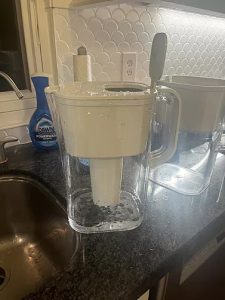
This pitcher also targets a broader set of concerns than “basic taste.” It’s built to reduce benzene, ibuprofen, and other emerging contaminants, which adds peace of mind for everyday drinking water. You’re still using it like a normal pitcher—fill, chill, pour—but it’s doing more work behind the scenes.
Maintenance stays predictable. Filter life is three months or 160 gallons, and the filter is larger with over four times more filtration media than standard pitchers. It’s also built to last 2X longer than standard pitchers, so the replacement rhythm typically feels less frequent than what many people expect from a pitcher.
The physical design is built for daily handling. You get a secure locking top and an easy flip lid, so filling feels tidy and controlled. Filter swaps stay tool-free with a twist-and-lock design and an easy finger-pull, and durable, impact-resistant Tritan and ABS plastic plus BPA-free, dishwasher-safe parts make it easier to keep the pitcher in good shape over time.
Pros
Cons
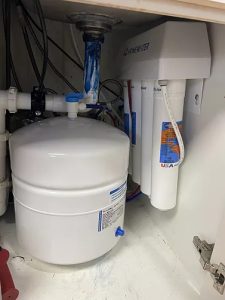
If you want a dedicated “best water in the kitchen” lane, this under-counter RO setup focuses on drinking and cooking water with its own faucet. It includes a dedicated stainless steel drinking water faucet, so you pour filtered water from a separate tap instead of sharing the main kitchen line. In daily use, that feels like a clear, reliable station for filling bottles, brewing coffee, and cooking with cleaner water.

Filtration runs through four stages that remove chlorine, lead, fluoride, and other impurities. The practical payoff is a cleaner, more refreshing taste that shows up most when water is the main ingredient—tea, coffee, soups, and even ice. It also makes it easier to reach for filtered water for quick tasks like rinsing fruit or filling an ice tray because the “good water” tap is always there.
This system is designed to fit neatly under the sink, so you get the upgrade without losing the entire cabinet. That matters when your under-sink space already has a trash bin, cleaning supplies, or organizers. You’re working with a compact setup that aims to keep the kitchen feeling normal.
Maintenance is shaped around the EZChange approach, which keeps replacements quick and straightforward. That means “filter day” stays more like a simple swap and less like a long maintenance session. The end result is a dedicated drinking-water routine that feels steady once it’s installed.
Pros
Cons
A good choice starts with one question: where do you want the improvement to show up—one sink, the whole kitchen, or the entire house? This HomeWater filters review buyer’s guide helps you map your biggest day-to-day water frustrations to the setup style that solves them without adding an annoying routine.
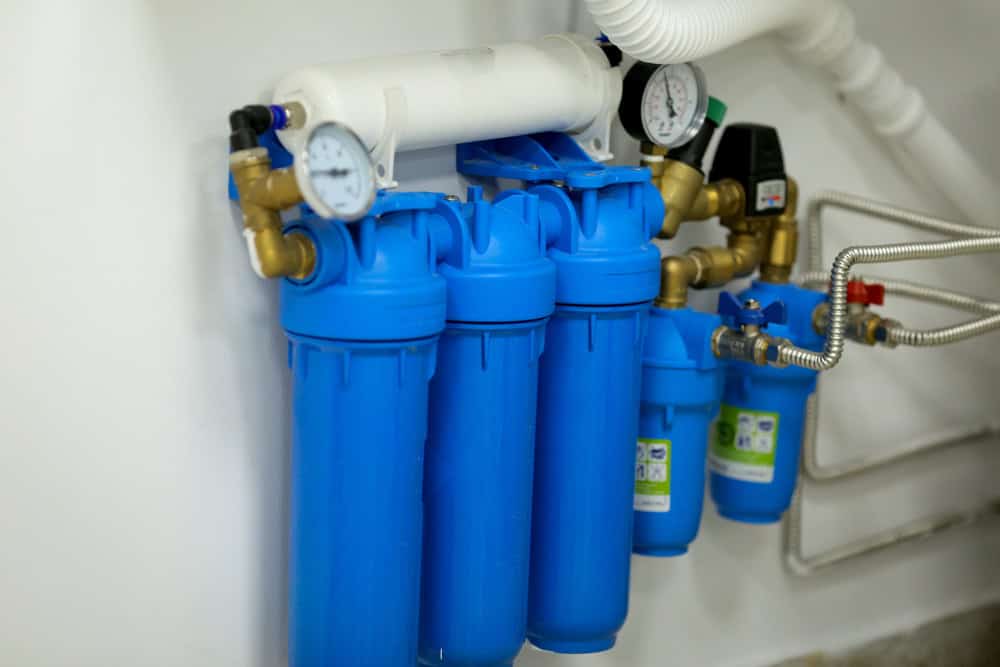
If your water frustrations show up everywhere—showering, laundry, dishes, and drinking—whole-home systems make the most sense. A whole-home filter treats water across the house, so the improvement follows you from the kitchen to the bathroom. That’s the right direction when you’re tired of “the water problem” popping up in multiple rooms.
If your main focus is drinking and cooking water, under-sink systems keep the solution targeted. A faucet-line under-sink filter upgrades your main kitchen faucet, so filtered water becomes the default for daily kitchen tasks. A dedicated-faucet RO system creates a separate “best water” station, which works well when you want a clear divide between general tap water and the water you drink most.
Taste and odor frustrations usually show up fast. If your water smells like chlorine, tastes off in a plain glass, or throws off coffee and tea, filtration aimed at chlorine and odor becomes the priority. A pitcher is the quickest on-ramp here, while under-sink filtration gives you the same kind of improvement without the refill routine.
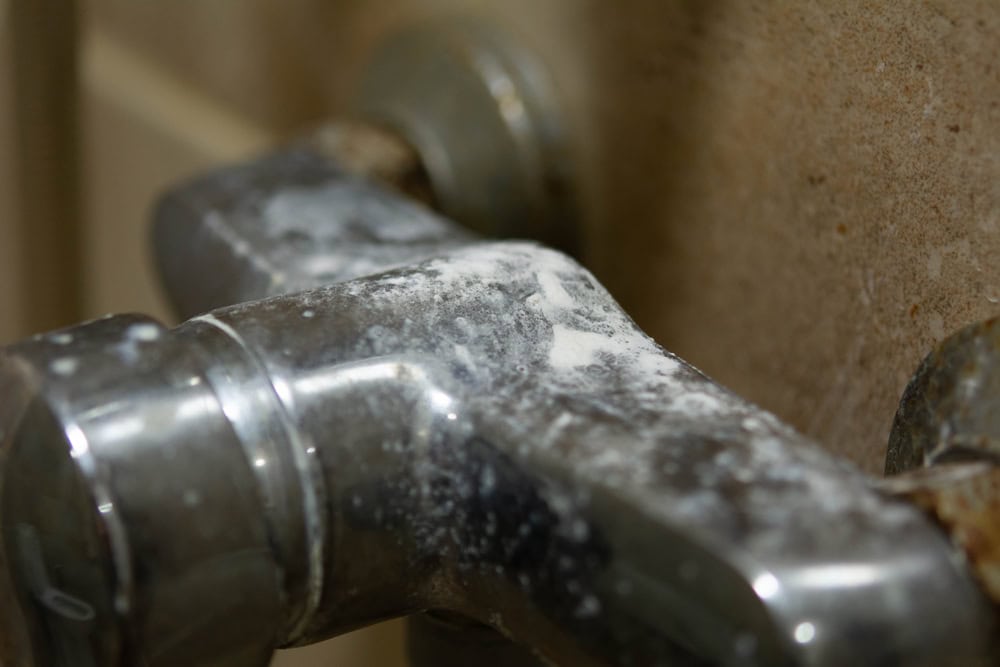
Scale and spotting live in a different lane. If you’re scrubbing faucets, wiping spots off glassware, and noticing soap film that hangs around, you’re dealing with how hardness affects the whole house. That’s where a whole-home softener fits best, because the benefit shows up across bathrooms, laundry, and kitchen cleanup rather than only in a glass of water.

The “best” system is the one you’ll actually enjoy using. A pitcher works when you don’t mind refilling and you like keeping cold filtered water ready in the fridge. It’s simple, familiar, and low-commitment, which makes it an easy fit for many households.
Under-sink filtration feels more effortless once it’s installed because it turns a tap into your filtered-water source. If you like the idea of filtered water from your main faucet, a faucet-line under-sink filter keeps things seamless. If you prefer a dedicated drinking-water tap, an under-counter RO system gives you that clear “this is the water I drink” moment.
Whole-home systems require a place to install on the main line, so they fit best when you’re ready for a bigger home-level change. The reward is broader impact: you get upgraded water for showers, laundry, and dishes without thinking about it every time you turn on a faucet.
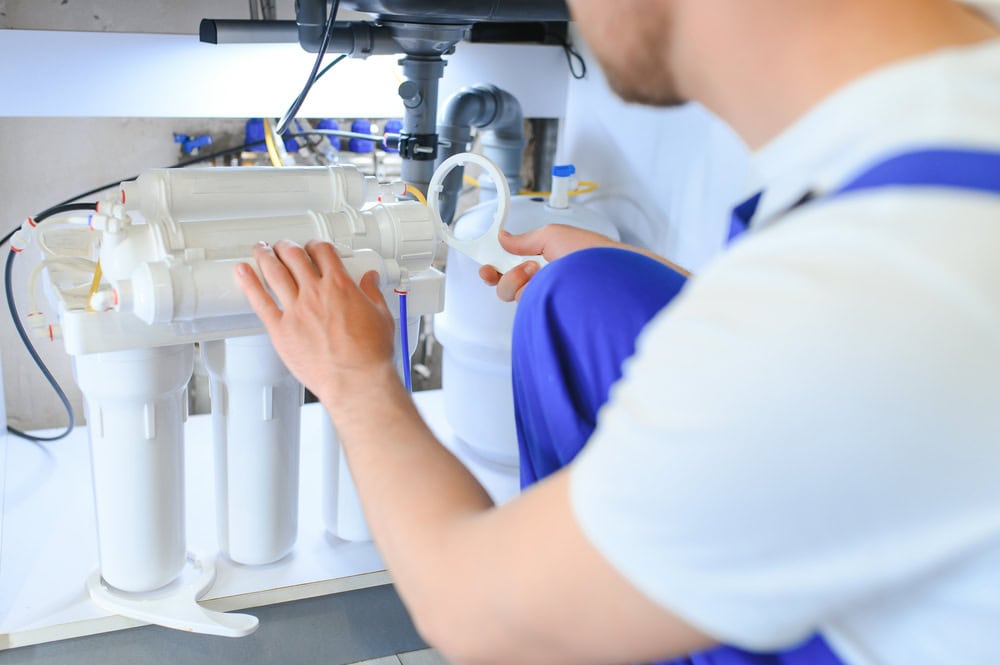
Under-sink systems ask for cabinet space. Before you commit, picture what lives under your sink now and how much room you realistically have. The simplest experience comes when the system fits neatly without forcing you to reorganize your entire cabinet every time you need a cleaning product.
If you want the widest, most “whole house” impact, the HomeWater UPSTREAM 4-Stage Whole Home Water Filter is the best fit for improving water across every faucet and building a more hands-off routine over time. If your biggest frustration is scale, spots, and soap film, the HomeWater UPSTREAM Whole Home Water Softener is the right match for changing how water behaves throughout the home.
For kitchen-first upgrades, the HomeWater EZChange 2-Stage Under Counter Under Sink Water Filter is best when you want filtered water from your main faucet without changing the look of your sink. If you prefer a separate drinking-water station with its own tap, the HomeWater EZChange 4-Stage Reverse Osmosis Filtration System fits that “best water for drinking and cooking” routine. And if you want the easiest entry point with almost no setup, the HomeWater 10-Cup Pitcher Water Filter is a strong everyday option for cleaner-tasting water kept ready in the fridge.
Pick based on where you feel the problem most—one faucet, the kitchen, or the whole house—then scroll back up to the list and choose the setup that matches your space and your routine. When these HomeWater filters reviews match your daily life, you’ll stick with the system, and that’s what makes the upgrade feel worth it.