This article may contain affiliate links. I may earn a small commission at no extra cost to you. Learn More

Menu

Iron problems in well water have a way of taking over the whole house. You see the orange stains first, then the black marks, then the sulfur smell every time hot water starts running. Before long, you are thinking about your shower, your laundry, your sinks, and even whether a glass of water feels worth pouring.
That is why choosing the right iron filter matters so much. Some systems stay tightly focused on iron, manganese, and sulfur. Others go further and add sediment control, carbon filtration, scale protection, or UV treatment. This guide breaks down five standout options so you can sort out which type of system fits your water, your home, and the kind of upkeep you actually want, especially if you are narrowing down the best iron filter for well water for your situation.
I compared the product information carefully to find strong options for homes dealing with iron-related well water issues. The goal here is simple: highlight systems that handle iron in different ways, then explain what those differences mean for daily life, maintenance, and whole-house performance.
For homeowners asking what is the best filter to remove iron from well water, SoftPro puts its focus exactly where many well-water households need it most. The Iron Master AIO is built around Air Injection Oxidation, so it goes after dissolved iron, particulate iron, manganese, and hydrogen sulfide without relying on chemicals, salt, or additives. That gives you a cleaner treatment routine right from the start, especially if you want to avoid extra feed tanks or chemical handling.
That treatment method matters because it stays centered on the problems people actually notice. When a system is targeting iron, manganese, and sulfur at the main line, you end up with fewer rust-colored stains, less metallic taste, and less of that rotten-egg smell that can make showering or filling a glass feel unpleasant. It is a practical, whole-house fix rather than a patch for one faucet.
Performance is a big reason this system stands out. It is rated for up to 30 ppm iron and up to 7 ppm manganese, while also addressing sulfur odors tied to hydrogen sulfide. That gives it the kind of headroom that makes sense when the water problem is not mild and the staining keeps showing up in toilets, tubs, sinks, and laundry.
SoftPro also gives you several ways to size it around your home. The system comes in 1.0, 1.5, and 2.0 cubic foot versions, with minimum flow requirements of 5 GPM, 7 GPM, and 10 GPM as you step up. That makes it easier to choose a setup that matches your well pump and household demand, so the system feels like it belongs in your house rather than being forced into the wrong job.
Ownership looks polished too. Automatic backwashing cleans the media bed and replenishes oxygen, while the 1-inch high-flow valve helps the system keep up with whole-house use. You also get a 4-line LCD, automatic settings, an electronic touchpad, and a self-charging backup capacitor that keeps the date and time for at least 48 hours during a power outage. Add the limited lifetime warranty on the filtration tank and core components, and this feels like a serious long-term choice for homeowners who want strong iron treatment without a complicated daily routine.
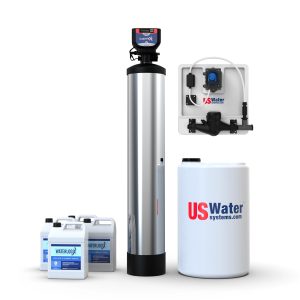
If you are searching for the best iron removal system for well water and sulfur odor is the bigger headache, the Matrixx InFusion takes a more aggressive path. Instead of using air injection, it uses continuous hydrogen peroxide injection along with catalytic carbon filtration media to oxidize and remove iron, manganese, and hydrogen sulfide. That means treatment starts before the water even reaches the media bed, which gives the system a very strong whole-house feel for tougher well water.
This design is especially appealing when sulfur smell is one of the biggest reasons you started shopping. By beginning oxidation early in the process, the system is built to hit rotten-egg water fast instead of merely softening the problem. That changes the day-to-day experience in a big way, because the water running through your showers and fixtures feels more controlled from the start.
The numbers here show why this system belongs near the top of the list. It is rated for up to 20 ppm iron, up to 30 ppm hydrogen sulfide, and up to 1 ppm manganese, and it works effectively from pH 6 to 9. It also works with iron-reducing and sulfur-reducing bacteria, so it fits the kind of well-water setup where the issue feels persistent rather than occasional.
Sizing is another strong point. You can choose 10 GPM, 15 GPM, or 20 GPM models, with the lineup mapped to homes with roughly 1 to 2 bathrooms, 2 to 3.5 bathrooms, or 4 to 6 bathrooms. That makes shopping easier, because you are not guessing whether the system will keep up once more than one fixture is running.
The ownership side is more advanced, but it is organized in a useful way. The package includes a 15-gallon peroxide tank, a precision injection panel, the inFusion filter, and 10 gallons of hydrogen peroxide. The valve tracks gallons used and monitors flow, while the Bluetooth-enabled Legacy View app lets you check settings and control regeneration and backwash timing from your phone. Automatic backwashing typically happens about every two days, and the 5-year warranty adds a solid layer of confidence for buyers who want a system built for tougher well-water conditions.
For readers looking at the best iron water purification system category but wanting broader coverage, the WS-7000UV is the broadest system in this roundup. Instead of stopping at iron treatment, it combines six stages: a spin-down filter, a 5-micron sediment filter, an AIO iron filter, a carbon filter, a salt-free softening stage, and UV disinfection. That gives you a whole-home package aimed at more than stains and smell alone.
The iron-focused part of the system still does real work. Its AIO stage targets iron, manganese, and sulfur, so it is built to reduce rust staining, dark marks, metallic taste, and sulfur odor in the same system. The unit is rated for up to 7 mg/L iron, 1 mg/L manganese, and 6 mg/L hydrogen sulfide, which gives it a meaningful role even before the other stages start adding their own benefits.
The front end is designed to protect the rest of the setup. The 20-inch pleated 5-micron sediment filter captures up to 95% of visible particulate matter and is built to maintain up to 15 GPM with minimal pressure drop. That means more of the dirt, sand, rust, and debris gets stopped before it can wear down the later stages, so the system has a better chance of feeling consistent across normal household use.
The extra stages are what make this system feel different from a standard iron filter. The carbon stage is NSF/ANSI 42 and 61 certified and rated for 600,000 gallons or 5 years, so you get broader taste, odor, and chemical cleanup throughout the house. The TAC salt-free stage is built to prevent 88%+ of scale-causing minerals from sticking to pipes and appliances without salt bags, brine, or wastewater, which makes the routine cleaner and less demanding than a traditional salt-based setup.
Then there is the UV side. The UV chamber is NSF/ANSI 55 certified, runs up to 15 GPM, and includes smart alerts for yearly lamp and sleeve replacement. That adds a disinfection layer many well-water households find reassuring, especially when they want one system that goes beyond iron and handles more of the whole-house picture.
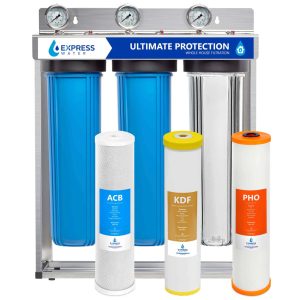
If you are comparing the best water filter for well water with iron options in a cartridge-based setup, Express Water takes a more familiar route, and that gives it a different kind of appeal. This system uses three stages: sediment, iron and manganese, and activated carbon block. So instead of focusing only on metal removal, it brings together several common forms of whole-house cleanup in one package.
That broader mix helps the system reach beyond staining alone. Along with iron and manganese, it is built to reduce hydrogen sulfide, chlorine, chloramines, rust, dirt, sand, silt, turbidity, odors, and cloudiness. For many households, that means the water does not just look better at the sink. It feels more refined across the house, whether you are showering, doing dishes, or running laundry.
One of the strongest points here is how manageable the upkeep sounds. Each filter set is rated for up to 100,000 gallons, or about 6 to 12 months in normal use, so you are not constantly swapping parts. The filters use a drop-in design, and the housings open with twist-off access, which makes regular service feel much more approachable.
Express Water also gives you some practical visibility into the system. There are three pressure gauges and three pressure release buttons, which helps you keep an eye on performance and notice when a filter is loading up. The clear first-stage housing makes that even easier, because you can see the sediment stage instead of opening the unit just to check its condition.
This system is best matched to lighter iron and manganese issues rather than very heavy loads. Its Zeomangan stage is rated to handle up to 0.2 ppm iron and 0.05 ppm manganese, and the unit uses standard 1-inch connections with a production rate of 0.25 gallon per second. So if you want a simpler whole-house cartridge system that adds carbon cleanup and keeps the routine easy to understand, this one makes a lot of sense.
For buyers narrowing down the best whole house iron filter shortlist, Crystal Quest keeps the idea simple and direct. This whole-house system is built to remove iron, manganese, and hydrogen sulfide, which are three of the most common culprits behind orange staining, black residue, and sulfur odor in well water. If your goal is to tackle those problems at the main line without adding extra treatment layers you may not need, that simplicity is a real advantage.
That focused design shows up in the way the system fits normal home use. Once iron, manganese, and sulfur are being treated before the water reaches your fixtures, the whole house benefits at once. You notice it in the places that usually show the problem first, like sinks, tubs, toilets, and laundry.
Crystal Quest offers two sizes here: 1.5 and 2.0 cubic foot versions. Rated capacity is 1,000,000 gallons on the smaller model and 1,500,000 gallons on the larger one, so this is designed for long-run whole-house treatment rather than short service intervals. That is the kind of sizing that makes sense when you want the system to feel established and dependable over time.
Flow is another part of the story. The 1.5 cubic foot model is rated for a 9 to 11 GPM service flow, while the 2.0 cubic foot model is rated for 10 to 13 GPM. Those numbers matter because whole-house equipment only feels convenient when it can keep up with real household use instead of turning every busy water hour into a compromise.
Automatic backwash helps the system stay easier to live with. Rather than letting trapped material sit in the media bed, the unit cleans itself out automatically, which supports steadier long-term performance. You can also choose either stainless steel or fiberglass, so there is some flexibility in how the system fits your utility space and installation preferences.
This buyer’s guide is here to help you narrow the field without getting buried in specs. The right choice usually comes down to four things: how serious the problem is, how much whole-house flow you need, how much extra treatment you want, and what kind of maintenance routine feels realistic for your home.
Not every home needs the same level of iron treatment, which is why choosing the best well water iron filter starts with understanding how serious the problem really is. Some systems are a better fit for lighter iron and manganese issues, while others are built for more stubborn water that leaves heavy staining or strong sulfur odor behind. That is why it helps to think first about what you are seeing every day rather than jumping straight to whatever looks the most advanced.
If the main problem is light staining with some added odor or cloudiness, a cartridge-based setup like the Express Water system may be enough. If the water is much more aggressive, the SoftPro Iron Master AIO and the Matrixx InFusion both make more sense because they are positioned around higher iron or sulfur demands. The Kind Water system sits in a different lane, because it still addresses iron but also layers in sediment control, carbon treatment, scale protection, and UV.
The key is not to overbuy or underbuy. A lighter-duty system will feel strained if the water problem is severe, while a very broad or aggressive setup may be more than you wanted if your main issue is limited to a manageable amount of iron.
When you are comparing the best whole house iron filter for well water setups, an iron filter has to keep up with the way your home uses water. That matters even more with whole-house systems, because the experience changes quickly when more than one tap, shower, or appliance is running. Good treatment only feels good in daily life when the system is sized around real household demand.
This is where flow-related sizing becomes useful. SoftPro gives you three tank sizes tied to different minimum flow requirements, while Matrixx offers 10 GPM, 15 GPM, and 20 GPM models connected to different bathroom counts. Crystal Quest also gives you two flow-rated sizes, and Kind Water builds around up to 15 GPM with minimal pressure drop through its sediment stage and up to 15 GPM through its UV chamber.
That does not mean bigger is always better. It means the right size matters. When the system fits the house properly, the treatment feels more natural and you spend less time worrying about whether the setup will hold up during normal daily use.
Finding the best iron filtration system often comes down to how much treatment you actually want rather than simply choosing the most complicated product on the page. Some buyers want one job done well. Others want a more complete whole-house cleanup while they are already investing in a main-line system. That difference shapes the best choice more than many people expect.
If you mainly want to stop rust stains, dark marks, and sulfur odor, focused systems like SoftPro and Crystal Quest are easier to understand. They stay close to the core problem and keep the message simple. Matrixx also stays centered on iron and sulfur, but it does it with a more aggressive peroxide-injection approach that makes sense when the water problem is tougher.
Kind Water and Express Water move in a broader direction. Express Water adds sediment and carbon stages, which gives you more general cleanup alongside lighter iron treatment. Kind Water goes much further by combining iron treatment with sediment control, carbon filtration, salt-free scale prevention, and UV disinfection. That makes it a strong choice when you want one system to do more than solve staining alone.
The best system on paper is not always the best system for your household. What matters just as much is whether the routine fits the way you want to manage the home. Some people want a more hands-off backwashing media tank. Others prefer cartridges that feel easy to inspect and replace. Some are comfortable with app-based controls and chemical-feed equipment, while others want to avoid that entirely.
SoftPro and Crystal Quest both lean into the automatic backwash style, which tends to feel more set-and-forget in normal use. Express Water gives you a clearer cartridge routine, supported by twist-off housings, pressure gauges, and a visible first-stage housing. Matrixx adds more technology and a more involved treatment path, including peroxide injection and app control, while Kind Water adds yearly UV lamp and sleeve attention on top of its broader treatment layout.
There is no universal winner on maintenance. The better question is what kind of ownership experience sounds easiest to live with. When the upkeep style matches your preferences, the system feels more useful long after the excitement of buying it wears off.
The SoftPro Iron Master AIO is the standout pick in this best iron water filtration systems comparison for buyers who want serious iron treatment without taking on chemical handling. It feels especially strong for homes dealing with heavier staining, manganese, and sulfur odor that need a focused whole-house answer.
The Matrixx InFusion is the better fit when sulfur smell is a major headache and you want a more aggressive treatment style. Its peroxide-injection setup and higher hydrogen sulfide capacity make it a strong match for tougher well-water conditions.
Kind Water WS-7000UV makes the most sense for households that want broader protection in one system. If you like the idea of combining iron treatment with sediment filtration, carbon cleanup, salt-free scale control, and UV disinfection, it is the most complete package in this roundup.
Express Water works well for buyers who want a simpler cartridge-based whole-house system for lighter iron and manganese issues. It also stands out if easy filter access and a more familiar maintenance routine matter to you. Crystal Quest is a strong choice for households that want a straightforward tank-style system with high capacity, automatic backwash, and a direct focus on iron, manganese, and sulfur.
The right pick comes down to the water problems you see every day and the type of routine you want after installation. Go back through the list, compare the systems that match your home best, and choose the one that fits your water, your flow needs, and your comfort level with upkeep.