This article may contain affiliate links. I may earn a small commission at no extra cost to you. Learn More

Menu

If you’re shopping for the best fluoride water filter, you’re probably trying to solve a very specific kind of uncertainty. You want to pour a glass, make coffee, cook, or mix formula and feel confident about what’s actually in the water—without turning your kitchen into a science project.
The tricky part is that “fluoride filtration” shows up in a few very different formats. Some options live on your countertop and run like a daily refill routine. Others sit under the sink and give you a dedicated drinking-water faucet. And then there are whole-home systems that treat the water everywhere—showers, laundry, and every tap.
To build this roundup of fluoride water filter reviews, I compared the product details carefully to find strong options that fit different homes and routines. The goal here is simple: help you pick the right style—countertop, under-sink, or whole-home—so you end up with a setup you’ll actually keep using.
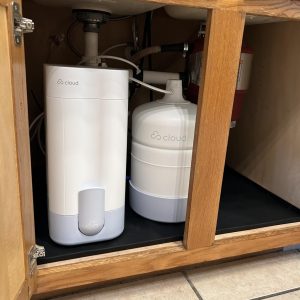
Cloud RO fits best when you want an under-sink reverse osmosis setup that feels seamless in daily life. It ties into the incoming water line under your sink and feeds a dedicated drinking-water faucet on the counter. Because it stores filtered water in a 2.8-gallon holding tank, you get that “walk up and fill” convenience instead of waiting around whenever you want a glass.
For fluoride-focused shopping, the filtration performance is the core story. Cloud RO runs multiple filtration stages that remove up to 99% of contaminants, including fluoride. It’s NSF 58 certified as a complete system, which gives you a cleaner, more confidence-driven way to compare it against other under-sink routes. [1]
The remineralization stage helps the water feel more satisfying to drink. It adds trace minerals like calcium, magnesium, and potassium, so your water doesn’t come across as thin or overly “blank.” The result is a cleaner finish that still feels natural when you drink it straight or use it for coffee and cooking.
Pressure and placement flexibility are where Cloud RO separates itself from a lot of under-sink setups. It uses an internal hydraulic pump to maximize water pressure, which is why it’s positioned to handle connections to things like a fridge or ice maker without the same pressure worries. That pressure support also opens up install flexibility, including placing it farther from the sink, like in a basement, without the same sense of performance drop.
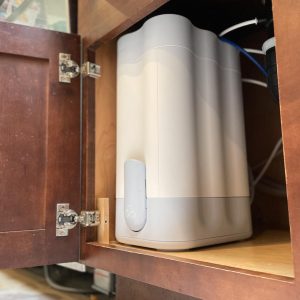
Efficiency stays front-and-center with the RO membrane’s 1:1 waste ratio. In practical terms, you get more finished water per gallon sent away than the older “one for you, four for the drain” style of RO. That makes everyday refills feel less wasteful, especially if you drink a lot of water or keep bottles topped up.
Ownership is designed to stay organized and low-drama. Internal sensors track water quality and consumption and send that data to the Cloud app, so you can monitor usage and filter status without guessing. The system is battery powered, so you don’t need an electrical connection under the sink, and filter changes are built around a modular “magazine” you release with a lever—no water shutoff and no plumbing handling during swaps. Replacement timing depends on your household, but a typical cadence for a family of four is around every 9 to 12 months, which keeps the routine manageable.
Pros
Cons
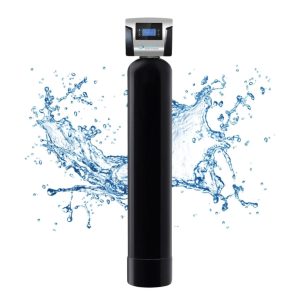
If you want fluoride-focused treatment throughout your home, and you’re looking at the best fluoride water filter system for whole-home coverage, this whole-house setup takes the widest approach. Instead of filtering just one faucet, it treats the water you drink, cook with, shower in, and run through appliances. That means your “filtered water” mindset doesn’t stop at the kitchen sink.
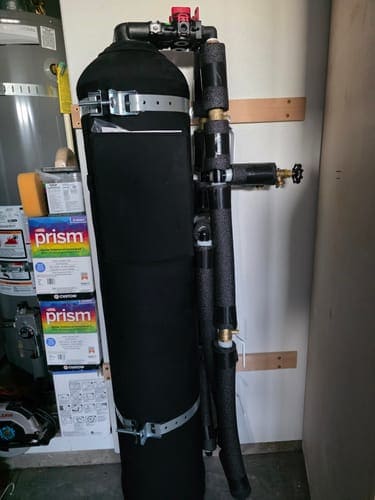
The media blend is built around catalytic carbon paired with bone char carbon. That combination targets fluoride reduction while also addressing chlorine and chloramines, so you’re solving multiple common tap-water frustrations in one system. In everyday use, that translates to more consistent water quality everywhere you use it—glass, pot, showerhead, and washing machine included.
The way the tank moves water through the media matters, too. This is an upflow design, which pushes water upward through the filtration bed to increase contact time and circulation. The reason that matters is simple: the water spends more time interacting with the media, so the system stays focused on treatment rather than rushing flow straight through.
Sizing lands this in the “real household” category. It’s positioned for medium to large homes, including setups with up to four to six bathrooms. That means you can run day-to-day life—showers, dishes, laundry, cooking—without feeling like you have to schedule water use around a filter.
Long-term ownership is meant to feel low-maintenance. The media is tested to filter hundreds of thousands of gallons and is expected to last up to six to ten years in typical conditions, so you’re not living on a constant replacement cycle. The upshot is fewer routine interruptions and more of a set-and-forget rhythm.
Support and extras round out the ownership experience. You get a lifetime warranty paired with a 60-day money-back guarantee. There’s also an optional quick-connect hose add-on to simplify hookups, and a neoprene tank jacket that’s designed to protect the tank, reduce condensation, and keep the setup looking tidy.
Pros
Cons

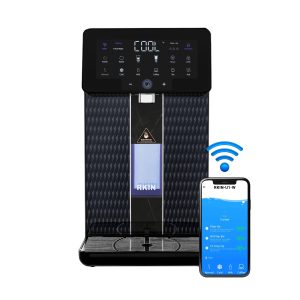
If you want fluoride-focused filtration without any plumbing work, and you’re comparing the best water filter for fluoride setups that stay on the counter, this countertop system keeps the setup simple. You fill a tank, place it on the unit, and you’re ready to go. For apartments, condos, and RV-style living, that “no tools, no adapters” approach makes it much easier to stick with.
Inside, the system runs a five-stage process with reverse osmosis doing the core purification. It’s third-party tested for reductions that include TDS, fluoride, lead, PFOA/PFOS, and chromium (both hexavalent and trivalent). In practical terms, you’re choosing a deep-filtration style that’s built around a membrane process, not a basic taste-only filter.
There’s also a freshness piece built into the design: a UV light helps keep water fresh when the system isn’t actively being used. That’s especially helpful if your household doesn’t dispense water constantly throughout the day. You end up with water that stays “ready” instead of sitting stagnant between pours.
Where this one feels most different day to day is temperature control. You get chilled filtered water, and you can set a default temperature so it comes out the way you like without extra fiddling. It also delivers instant hot water at boiling temperatures, which makes tea, instant coffee, and quick cooking tasks feel effortless.
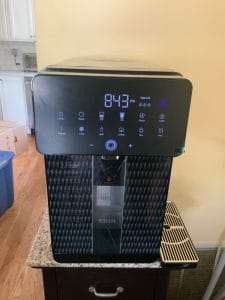
Cooling performance is defined in a very usable way. It cools about 15 ounces at a time down to 59°F in roughly 15 minutes, and you can still dispense while it’s cooling. That means you’re not waiting for a batch cycle to finish just to refill a bottle.
Maintenance stays predictable because the replacement ranges are clearly laid out. It uses a 200 GPD encapsulated RO membrane, with a first-and-second stage combo filter typically replaced every 6–12 months, the RO membrane every 12–24 months, and the alkaline post filter plus hydrogen module every 6–12 months, depending on your water and usage. It runs a 1:1 split of purified water to wastewater, and it keeps wastewater separate inside the tank, which makes it easy to reuse for things like watering plants. The footprint is compact at 9.5 inches wide, 17 inches high, and 19 inches deep, and it comes with a 1-year satisfaction guarantee/warranty.
Pros
Cons
If you like the idea of a dedicated drinking-water faucet at the sink, and you’re building the best water filter for fluoride removal shortlist for your kitchen, this under-sink RO setup fits that style. It’s built to give you a consistent source of purified water for daily drinking and cooking, without taking over your countertop. You get that “turn the faucet, fill the glass” convenience once it’s installed.
You can choose between a 5-stage drinking-water configuration or a 6-stage option that adds a hydration-focused stage. That choice matters because it lets you align the system with how you prefer your water to taste and feel. In everyday use, it means you’re not locked into one flavor profile if you care about that final sip.
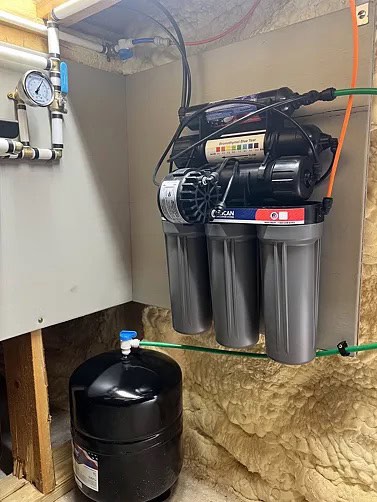
The filtration chain starts with a 5-micron sediment filter, which catches grit so the rest of the system isn’t doing the dirty work. Carbon stages handle chlorine, taste, and odor, and there’s a 1-micron special blend carbon block designed to eliminate chloramine. [2] The payoff is simple: the water coming out of the dedicated faucet tastes more neutral, especially if your supply tends to lean “pool-like.”
At the core, a 100 GPD membrane does the reverse osmosis separation, and a post carbon filter finishes the water before it hits your glass. That’s the combination that supports the “clean coffee and tea” experience—less lingering tap flavor, more straightforward taste. It’s the kind of setup that quickly becomes your default for cooking water, too.
If you opt for the 6-stage version, the hydration-focused stage raises pH to 8.5–10 and shifts ORP to around –100 mV to –200 mV. In plain language, the water lands more on the alkaline side, which many people notice as a smoother sip. The system also lists 95%–99% rejection of TDS, which reflects the membrane’s role in separating out dissolved solids rather than just improving taste.
Install and ownership details are designed for real under-sink constraints. It comes with a storage tank and a tank base that lets it stand up or lay down, so you can work with the space you actually have. Quick-connect fittings grip tubing with stainless steel teeth and seal with an O-ring, and the setup is designed for add-ons like feeding an ice maker or fridge dispenser. You also get a 5-year warranty and a TDS meter to keep an eye on performance over time.
Pros
Cons
If you want fluoride-focused RO performance in a countertop format, and you’re scanning the best water filter for removing fluoride contenders that avoid plumbing, this unit keeps the routine very straightforward. You skip plumbing entirely and work with a removable 4.5-liter tank. It’s designed to feel like a daily kitchen habit, not an installation project.

One of the nicest “real life” touches is how the water stays ready to pour. The system keeps a 1.4-liter pitcher of purified water on hand, so you’re filling a glass the same way you would from a fridge pitcher. In normal use, it refills automatically after you lift the pitcher or after about 60 seconds of continuous pouring, which means you’re not hovering over it between drinks.
Filtration is built around a 0.0001-micron RO membrane, and it’s tested for 99.99% reduction of fluoride. It also carries NSF/ANSI 58 certification. The practical result is confidence that the core membrane process targets fluoride in a measurable way, not just in a “tastes better” way.
Production speed helps this feel usable for everyday drinking. It’s rated at 100 GPD, which supports quicker turnaround when you’re refilling multiple times in a day. It runs a 3.5:1 pure-to-drain ratio, so you get more finished water per gallon sent away compared to many RO setups that waste more.
There’s a simple freshness cue built in, too. A water quality indicator turns red after 24 hours, prompting you to refresh the pitcher when you want the cleanest-tasting pour. That keeps the routine easy: pour, refill, and refresh when the indicator nudges you.
Maintenance is meant to stay low-friction. The RO membrane uses a twist-off replacement, and the post filter swaps with a pull-out, push-in style change. In typical use, the RO membrane runs about 12 months, which keeps your “maintenance day” from becoming a frequent chore.
Pros
Cons
Choosing the right fluoride water filter starts with a simple question: where do you want the treated water to show up, especially if you’re aiming for the best water filter for chlorine and fluoride in your daily routine? This guide helps you sort the options by placement, daily routine, and the kind of “water moments” you care about most—drinking, cooking, showers, or all of it.
A whole-home system makes sense when the best fluoride water filter path for you is treated water everywhere: kitchen, bathrooms, laundry, and appliances. That approach changes the feel of ownership because you stop thinking in terms of “the one filtered faucet” and start thinking in terms of the entire home having a consistent baseline.
A point-of-use system focuses on what you drink and cook with. Under-sink RO gives you a dedicated faucet experience, while countertop systems keep things portable and plumbing-free. The tradeoff is mostly about routine: fixed install versus refill-and-pour convenience.

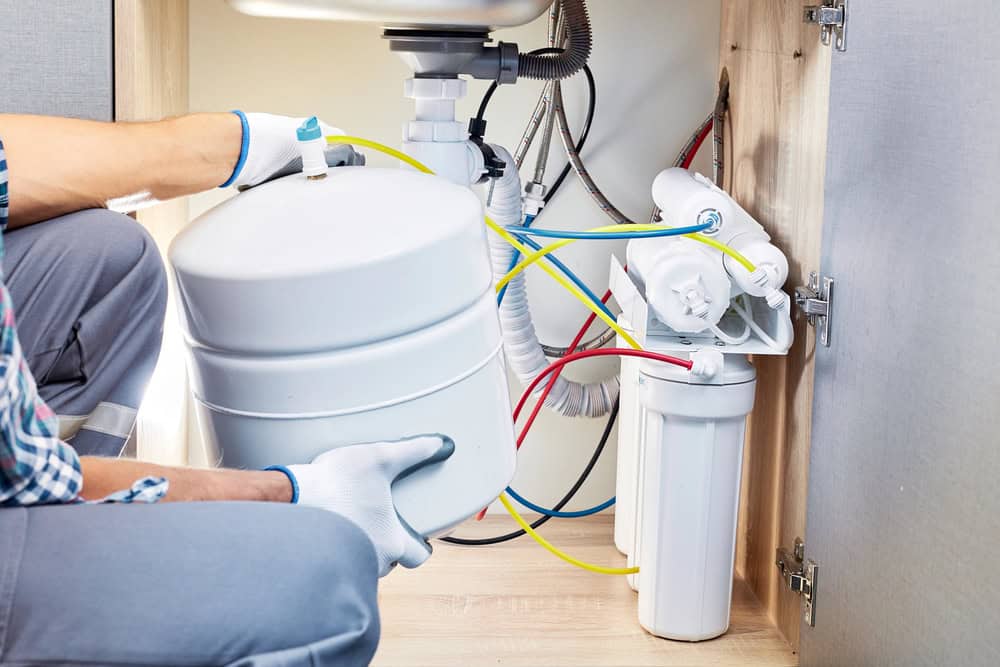
Under-sink RO fits best when you want filtered water to feel effortless once it’s installed. You walk up, turn the dedicated faucet, and fill a glass or pot without refilling any tanks. If you like a clean counter and you don’t mind an under-sink setup, this is usually the most “invisible” day-to-day experience.
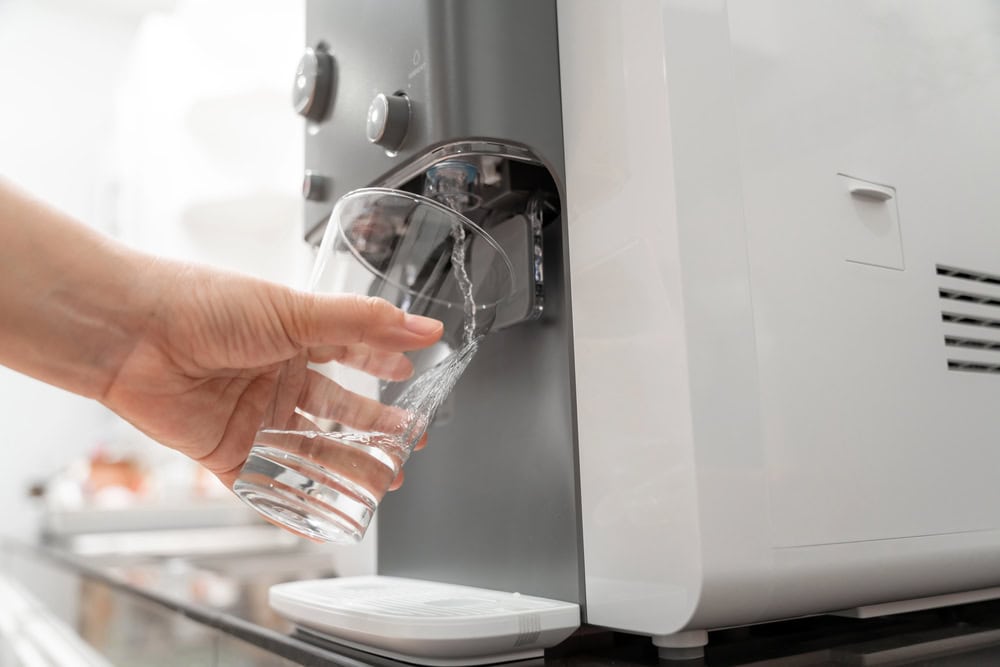
Countertop RO fits best when you want zero installation and you’re okay with a refill rhythm. A removable tank and pitcher setup makes your water routine feel familiar—like keeping a chilled pitcher ready—while a dispenser-style unit leans toward “appliance convenience,” especially if you love fast hot drinks.
If you’re comparing the best water filter for fluoride models, production rate affects how patient you need to be. A higher daily production rating makes the system feel more responsive, so you’re not timing your routine around water-making.
Waste ratio shapes efficiency and how the system fits into your mindset. Some setups call out a 1:1 split, while another lists a 3.5:1 pure-to-drain ratio. In practice, a better ratio means you get more finished water for the water sent away, which keeps daily use feeling less wasteful. [3]

If you’re drawn to countertop dispensers, temperature control can be a deciding factor. Instant boiling hot water changes how you make tea, quick meals, and baby formula. Cold water with a settable temperature also makes bottle refills feel more consistent and convenient.
For whole-home filtration, design details affect how the system lives in your space. An upflow design focuses on contact time through the media, and a tank jacket that reduces condensation keeps the setup cleaner around the edges. These aren’t flashy features, but they make ownership feel smoother over time.

Some setups keep maintenance simple with twist-off or push-in style replacements, and a typical membrane timeline around a year helps you avoid constant filter chores. A built-in indicator that prompts you after a set period also makes it easier to stay on top of freshness without overthinking it.
Other systems spread maintenance across multiple components with different replacement ranges. That’s not “hard,” but it works best when you’re comfortable tracking a routine. If you like predictable reminders and you don’t mind swapping a few parts on a schedule, a more feature-rich countertop dispenser can still feel very easy to live with.
If you’re trying to land on the best water filter for fluoride removal for your home, SoftPro Fluoride & Chlorine+ SUPER Filter is the clearest fit, especially for larger homes where you don’t want to micromanage water use. If you want a countertop system with a full appliance-style experience, RKIN U1-W stands out for hot-and-cold dispensing and a defined replacement routine. If you prefer a dedicated faucet and a classic under-sink setup for drinking and cooking, the US Water Systems reverse osmosis system fits that “turn the tap and fill” lifestyle. And if you want a straightforward countertop RO routine with a pitcher always ready, Frizzlife WB99-C delivers a simple refill-and-pour flow with a clear fluoride-focused performance point.
Now pick the style that matches your home and your habits, not just the strongest-sounding spec. Scroll back up to the product list, choose the setup you’ll actually use every day, and you’ll end up with a fluoride water filter that feels like a genuine upgrade instead of another abandoned kitchen gadget.